 日本語

Aluminum Oxide Mohs Hardness: How Hard Is White Aluminum Oxide?
Introduction
Aluminum oxide is one of the most widely used abrasive materials in modern manufacturing. Known for its high hardness, wear resistance, and excellent grinding performance, it plays an important role in abrasive blasting, grinding wheels, polishing, and surface preparation.
But how hard is aluminum oxide on the Mohs hardness scale? How does white aluminum oxide compare with diamond, boron carbide, silicon carbide, and other industrial abrasives?
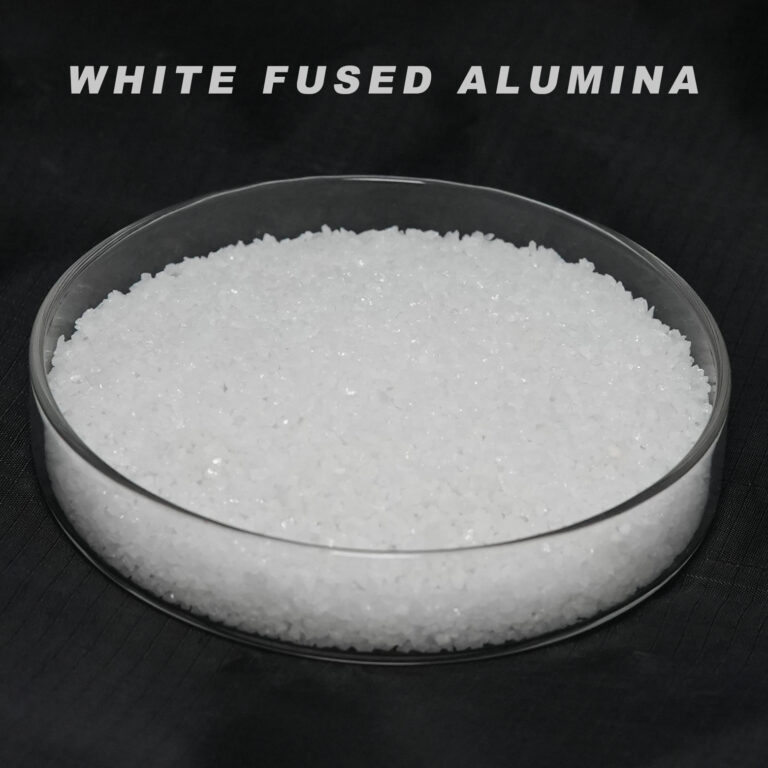
White Aluminum Oxide, also known as White Fused Alumina (WFA), has a Mohs hardness of approximately 9.0, making it one of the hardest commonly used industrial abrasive materials.
Understanding the hardness of different abrasives helps manufacturers and industrial buyers select suitable materials for specific grinding, blasting, and finishing applications.
In this article, we will explore the Mohs hardness of aluminum oxide, compare different abrasive materials, and explain why white aluminum oxide is widely used in industrial applications.
1. What Is the Mohs Hardness Scale?
The Mohs hardness scale is a measurement system used to describe a material’s resistance to scratching. It was developed by German mineralogist Friedrich Mohs in 1812.
The scale ranges from 1 to 10, with each number representing a reference mineral.
A harder material can scratch a softer material, while a softer material cannot easily scratch a harder one.
Mohs Hardness Scale Reference
| モアスの硬さ | Reference Mineral | Characteristics |
|---|---|---|
| 1 | Talc | Extremely soft |
| 2 | Gypsum | Very soft |
| 3 | Calcite | Soft |
| 4 | Fluorite | Relatively soft |
| 5 | Apatite | Medium hardness |
| 6 | Orthoclase Feldspar | Moderately hard |
| 7 | Quartz | Hard |
| 8 | Topaz | Very hard |
| 9 | コランダム | Extremely hard |
| 10 | Diamond | Hardest on the Mohs scale |
Corundum, which is a crystalline form of aluminum oxide (Al₂O₃), has a Mohs hardness of 9. Diamond is the only mineral on the traditional Mohs scale with a higher rating of 10.
It is important to understand that the Mohs scale is an ordinal scale rather than a linear measurement. For example, a material with a hardness of 10 is significantly harder than one with a hardness of 9, but it is not simply 11% harder.
2. What Is the Mohs Hardness of Aluminum Oxide?
The Mohs hardness of aluminum oxide (Al₂O₃) is approximately 9.0.
Aluminum oxide is a crystalline ceramic material with excellent hardness, wear resistance, and chemical stability. Its hardness makes it suitable for various industrial abrasive applications.
In particular, alpha-alumina (α-Al₂O₃), the main crystalline phase in white fused alumina, has a Mohs hardness of approximately 9.0.
White Aluminum Oxide Hardness
White Aluminum Oxide, also known as White Fused Alumina, is manufactured by melting high-purity alumina in an electric arc furnace at high temperatures.
After cooling, the fused material is crushed, processed, and screened into different abrasive grain sizes.
Its typical physical properties include:
| 不動産 | 典型的な値 |
|---|---|
| 商品名 | White Aluminum Oxide |
| Common Name | 白色電融アルミナ(WFA) |
| 化学式 | Al₂O₃ |
| Main Crystal Phase | α-Al₂O₃ |
| アル2O₃含有量 | ≥99.5% (typical grade) |
| モアスの硬さ | 9.0 |
| 色 | ホワイト |
| True Specific Gravity | Approximately 3.90 g/cm³ or higher |
| 融点 | Approximately 2,050–2,250°C |
The exact specifications may vary depending on the manufacturer and product grade.
Why Is White Aluminum Oxide So Hard?
Several material characteristics contribute to its high hardness.
1. Stable Crystal Structure
White fused alumina mainly consists of alpha-alumina crystals. Its strong atomic bonding and stable crystal structure contribute to its high resistance to scratching and deformation.
2. High Alumina Purity
White fused alumina typically contains at least 99.5% aluminum oxide in certain industrial grades. Its high purity helps provide consistent material properties and reduces unwanted impurities.
3. Excellent Wear Resistance
Its high hardness allows white aluminum oxide grains to maintain effective abrasive action during grinding, blasting, and polishing processes.
4. Sharp Abrasive Grain Structure
After crushing and processing, white fused alumina forms angular abrasive grains that can effectively remove surface materials.
These characteristics make white aluminum oxide suitable for precision grinding and applications requiring controlled surface finishing.
3. Mohs Hardness Comparison of Different Abrasive Materials
Different abrasive materials have different hardness levels, chemical compositions, and industrial properties.
Diamond, boron carbide, and silicon carbide are generally harder than aluminum oxide, while different grades of fused alumina have similar Mohs hardness values.
The following table provides a general comparison of common abrasive materials.
Mohs Hardness of Common Abrasives
| Abrasive Material | 化学式 | Mohs Hardness (Approx.) | 一般的な用途 |
|---|---|---|---|
| Diamond | C | 10 | Precision cutting, grinding, polishing |
| Boron Carbide | B₄C | 9–10 | Abrasive blasting, lapping, polishing |
| ケイ素炭化物 | SiC | 9–10 | Grinding, cutting, polishing |
| White Aluminum Oxide | Al₂O₃ | 9.0 | Precision grinding, blasting, polishing |
| Brown Fused Alumina (Grade 1) | Al₂O₃-based | 9.0 | General grinding, blasting |
| Brown Fused Alumina (Grade 2) | Al₂O₃-based | 9.0 | Grinding, blasting, refractory materials |
| Black Fused Alumina | Al₂O₃-based | Around 9.0 | Grinding, polishing, surface treatment |
| Garnet Sand | Natural silicate minerals | 6.5–7.5 | Abrasive blasting, surface preparation |
| Graphite | C | 1–2 | Lubricants, electrodes, industrial applications |
Note: These are approximate reference values, not universal product specifications. Actual hardness can vary with material composition, crystal structure, and measurement method. Black fused alumina is distinct from black silicon carbide, which is a different material.
Sources for the reference values include the Universal Abrasives Manufacturers Association and READE’s abrasive hardness reference.
Which Abrasive Materials Are Harder Than White Aluminum Oxide?
Diamond
Diamond has a Mohs hardness of 10 and is the hardest material on the traditional Mohs scale. It is widely used in precision cutting tools, grinding wheels, and polishing applications.
Boron Carbide
Boron carbide is an extremely hard ceramic material with a Mohs hardness commonly reported around 9–10. It is used in specialized abrasive applications and wear-resistant components.
ケイ素炭化物
Silicon carbide has a Mohs hardness of approximately 9–10. It is known for its sharp cutting characteristics and is commonly used for grinding, cutting, and polishing hard materials.
How Do Different Aluminum Oxide Abrasives Compare?
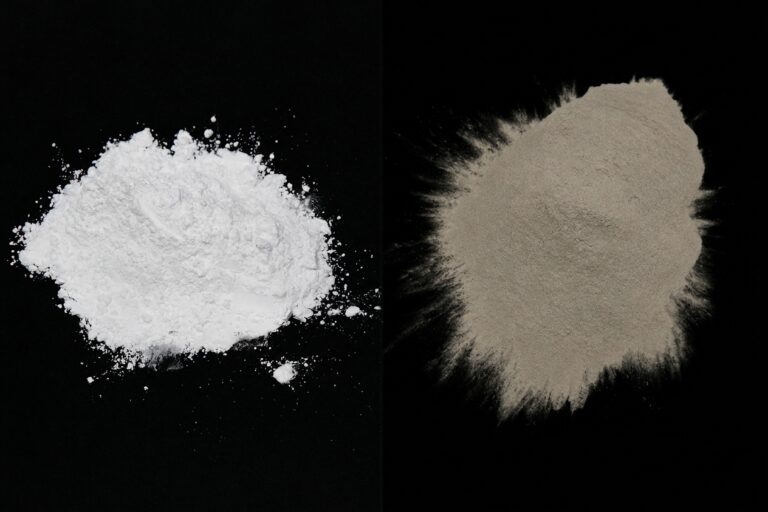
White fused alumina, brown fused alumina, and black fused alumina are all aluminum oxide-based abrasive materials.
Their Mohs hardness is generally around 9.0, but their chemical composition, purity, toughness, and abrasive behavior can differ.
- White Aluminum Oxide: Higher alumina purity and lower impurity levels, suitable for applications requiring clean and controlled abrasive performance.
- Brown Fused Alumina: Commonly used for general-purpose grinding and abrasive blasting, with good toughness.
- Second-Grade Brown Fused Alumina: A commercial grade with different chemical composition and impurity limits from first-grade material. Its Mohs hardness remains approximately 9.0.
- Black Fused Alumina: An aluminum oxide-based abrasive with a darker appearance and different composition from white and brown fused alumina.
Therefore, selecting an abrasive should not depend on Mohs hardness alone. Purity, grain toughness, friability, particle size, and application requirements are also important.
4. White Aluminum Oxide vs. ケイ素炭化物: Which Is Harder?
White aluminum oxide and silicon carbide are two widely used industrial abrasive materials.
Although both have high hardness, silicon carbide is generally harder than white aluminum oxide and has sharper cutting characteristics.
| Comparison | White Aluminum Oxide | ケイ素炭化物 |
|---|---|---|
| 化学式 | Al₂O₃ | SiC |
| モアスの硬さ | 9.0 | 9–10 |
| Appearance | ホワイト | Black or Green |
| 強靭性 | Relatively tough, depending on grade | More brittle |
| Cutting Characteristics | Strong grinding performance | Sharp and aggressive cutting |
| Main Applications | Grinding, blasting, polishing | Grinding, cutting, polishing |
White aluminum oxide is often selected for grinding and finishing applications involving hardened steel and other metals.
Silicon carbide is particularly suitable for applications involving glass, ceramics, stone, and non-ferrous materials.
The choice depends on the workpiece material, desired surface finish, and processing conditions.
5. What Are the Main Applications of White Aluminum Oxide?

Because of its high hardness, high purity, and excellent abrasive properties, white aluminum oxide is used in many industrial applications.
5.1 Abrasive Blasting
White aluminum oxide is widely used as an abrasive blasting material for removing rust, coatings, oxide layers, and surface contaminants.
Its angular grains provide effective cutting action and help create a suitable surface profile for subsequent coating and painting processes.
Common applications include:
- Metal surface cleaning
- 錆除去
- Paint and coating removal
- 表面処理
- Precision component blasting
5.2 Grinding Wheels and Bonded Abrasives
White fused alumina is an important raw material for manufacturing bonded abrasive products.
It is commonly used in:
- 研削砥石
- Abrasive stones
- マウントポイント
- Cutting and grinding tools
- Resin-bonded abrasive products
Its hardness and grinding characteristics make it suitable for precision grinding applications, particularly where high-purity abrasive grains are required.
5.3 Precision Polishing
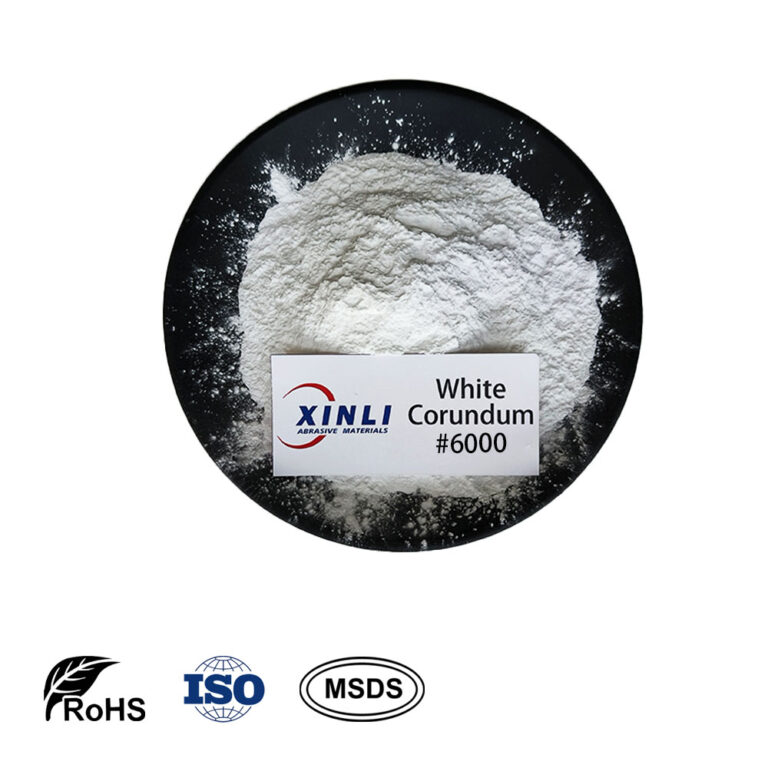
Fine white aluminum oxide powder can be used in polishing and surface finishing processes.
Different particle sizes provide different levels of material removal and surface refinement.
Fine grades are used in selected applications involving metal components, precision instruments, and industrial surface finishing.
5.4 Refractory Materials
White fused alumina is also used in refractory products because of its high alumina content and thermal stability.
It can be incorporated into refractory castables, furnace linings, and other high-temperature industrial materials.
6. How to Choose the Right White Aluminum Oxide Abrasive?
Selecting the right white aluminum oxide grade requires more than checking its Mohs hardness.
Industrial buyers should consider the following factors.
粒子サイズ
Coarse grains are generally suitable for aggressive grinding and abrasive blasting, while fine powders are more appropriate for precision finishing and polishing.
化学組成
Al₂O₃ content and impurity levels are important when selecting high-purity white fused alumina.
粒状形状
Angular grains provide effective cutting action and are commonly used in abrasive blasting and grinding applications.
Particle Size Distribution
Consistent particle size distribution helps maintain stable processing performance and predictable surface finishing results.
Application Requirements
Different applications require different abrasive grades. Buyers should select the material according to the workpiece, processing method, and required surface finish.
7. Why Choose a Reliable White Aluminum Oxide Manufacturer?
For industrial buyers, choosing a reliable white fused alumina manufacturer is essential for maintaining consistent abrasive quality.
A professional manufacturer should provide:
- Stable Al₂O₃ content and chemical composition
- 均一な粒径分布
- Multiple FEPA and JIS grain sizes
- Reliable production capacity
- Strict quality inspection
- Customized specifications according to customer requirements
Working with an experienced supplier helps buyers obtain suitable abrasive materials for grinding, blasting, polishing, and refractory applications.
結論
The Mohs hardness of aluminum oxide is approximately 9.0, making it one of the hardest widely used industrial abrasive materials.
White Aluminum Oxide, also known as White Fused Alumina, is particularly valued for its high alumina purity, hardness, and stable abrasive performance.
Although diamond, boron carbide, and silicon carbide can have higher hardness values, white fused alumina remains an important choice for industrial grinding, blasting, polishing, and refractory applications.
Understanding the hardness and characteristics of different abrasive materials helps manufacturers and buyers select the right product for their specific processing requirements.
Looking for high-quality White Aluminum Oxide for industrial applications? Contact us to learn more about our white fused alumina grains and micro powder, available in different particle sizes and specifications.
8. Frequently Asked Questions About Aluminum Oxide Hardness
Q1: What is the Mohs hardness of aluminum oxide?
Aluminum oxide (Al₂O₃) has a Mohs hardness of approximately 9.0 when present in its corundum crystal form. It is one of the hardest commonly used industrial abrasive materials.
Q2: Is white aluminum oxide harder than brown aluminum oxide?
Both white and brown fused alumina generally have a Mohs hardness of approximately 9.0. Their main differences are chemical purity, impurity content, toughness, and abrasive characteristics rather than their Mohs hardness.
Q3: Is silicon carbide harder than white aluminum oxide?
Generally, yes. Silicon carbide has a Mohs hardness of approximately 9–10, while white aluminum oxide is approximately 9.0. Silicon carbide also has sharper cutting characteristics.
Q4: What is the hardest abrasive material?
Diamond is the hardest material on the traditional Mohs scale, with a hardness of 10. Boron carbide and silicon carbide are also extremely hard industrial abrasive materials.
Q5: What is white aluminum oxide used for?
White aluminum oxide is commonly used in abrasive blasting, grinding wheels, precision grinding, polishing, refractory manufacturing, and ceramic applications.
Q6: Does higher Mohs hardness always mean better abrasive performance?
No. Hardness is only one factor affecting abrasive performance. Grain toughness, friability, particle shape, purity, and particle size also influence cutting efficiency and surface finishing results.