

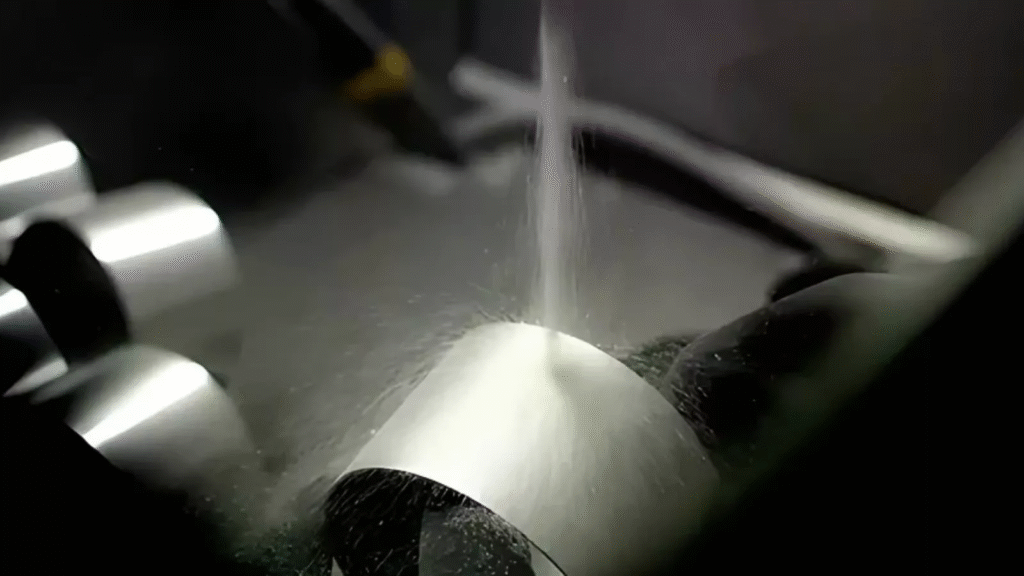
Why White Corundum Works for Sandblasting
Sandblasting performance depends on the abrasive’s hardness, grain shape, particle size, and surface condition. White corundum combines these characteristics to provide controlled and effective abrasive action for a range of surface treatment applications.
- High-purity aluminum oxide composition
- High hardness for effective material removal
- Angular grains with strong cutting action
- Low impurity content
- Suitable for rust and oxidation removal
- Useful for coating and paint removal
- Available in multiple grain sizes
The abrasive action helps break down and remove rust, oxidation, scale, and other surface contaminants from metal components.
White corundum can prepare metal surfaces before painting, coating, plating, or other downstream surface treatments.
Different grain sizes can be selected according to the degree of contamination, removal requirement, and desired surface profile.
Applications in Sandblasting & Rust Removal
White corundum can be used for a variety of abrasive blasting and surface preparation operations. The suitable grade depends on the material being treated, the condition of the surface, and the required result.
Rust Removal
White corundum can remove rust and corrosion from steel, stainless steel, and other metal components. It is particularly useful when a clean surface is required before coating or further processing.
Paint & Coating Removal
Abrasive blasting with white corundum can remove old paint, protective coatings, residues, and unwanted surface layers from metal components.
Metal Surface Cleaning
White corundum is suitable for cleaning metal surfaces contaminated by oxidation, dirt, residues, and other unwanted materials before subsequent processing.
Surface Preparation Before Coating
Proper surface preparation is important before painting and protective coating. White corundum can help remove contaminants and establish a suitable surface condition for subsequent coating operations.
Stainless Steel Cleaning
Appropriately selected white corundum grades can be used for stainless steel surface cleaning and preparation where controlled abrasive action and surface cleanliness are required.
Precision Sandblasting
Fine abrasive grades can be selected for smaller components and applications requiring more controlled abrasive treatment and surface refinement.
Choosing the Right White Corundum Grain Size
Grain size is one of the main factors affecting abrasive blasting performance. Coarser particles generally provide stronger material removal, while finer particles offer more controlled surface treatment.
| Application | Recommended Size | Main Purpose |
|---|---|---|
| Heavy Rust Removal | Coarse Grit | Removing heavy rust, corrosion, scale, and firmly attached contaminants |
| Paint & Coating Removal | Coarse / Medium Grit | Removing paint, coatings, and surface residues |
| General Metal Cleaning | Medium Grit | Removing oxidation, dirt, and surface contaminants |
| Surface Preparation | Medium / Fine Grit | Preparing surfaces for painting or protective coatings |
| Fine Surface Treatment | Fine Grit / Powder | Controlled abrasive treatment and surface refinement |
Note: The actual abrasive size should be selected according to the workpiece material, surface condition, blasting equipment, operating pressure, and required surface profile. Application testing is recommended before establishing production parameters.
Key Advantages of White Corundum for Sandblasting
High Purity
High aluminum oxide content provides stable abrasive characteristics for applications where abrasive purity is important.
High Hardness
High hardness enables effective cutting and impact action during rust removal, cleaning, and surface preparation.
Sharp Grain Structure
Angular abrasive grains provide effective cutting action for removing rust, coatings, oxidation, and contaminants.
Consistent Particle Size
Properly classified grains help provide predictable blasting performance and more consistent surface results.
Flexible Grain Selection
Different grit and powder sizes allow the abrasive to be matched to different stages of surface preparation.
Suitable for Metal Surfaces
Depending on the grade and process conditions, white corundum can be used on steel, stainless steel, aluminum, and other metal surfaces.
How to Select White Corundum for Sandblasting
Choosing an abrasive requires more than simply selecting a grit size. The workpiece, surface condition, equipment, and required surface profile should be evaluated together.
Identify the Workpiece
Determine whether the material is carbon steel, stainless steel, aluminum, or another metal and consider its sensitivity to abrasive treatment.
Check the Surface Condition
Evaluate the amount of rust, corrosion, paint, oxidation, scale, or other contamination that needs to be removed.
Choose the Grain Size
Use coarser grades when stronger material removal is required and finer grades when more controlled surface treatment is needed.
Match the Blasting Equipment
Consider the blasting machine, nozzle size, operating pressure, abrasive flow rate, and blasting method when selecting the abrasive grade.
Define the Surface Requirement
Determine the required surface profile and final condition, especially when the surface will be painted, coated, plated, or otherwise treated.
White Corundum Grades for Sandblasting
White corundum is supplied in different abrasive forms and particle sizes for surface preparation, rust removal, cleaning, and blasting applications.
The appropriate specification can be selected according to the blasting process, workpiece condition, and required surface finish.
Common Product Forms
- White Fused Alumina Grit
- White Corundum Coarse Grit
- White Corundum Fine Grit
- White Corundum Powder
- Multiple Particle Size Specifications
- Customized Industrial Packaging
Conclusion
White corundum is a high-purity abrasive for sandblasting, rust removal, surface cleaning, coating removal, and metal surface preparation. Its high hardness, sharp grain structure, low impurity content, and range of particle sizes make it suitable for different abrasive blasting requirements.
For best results, the abrasive grade should be matched to the workpiece material, surface condition, blasting equipment, and required surface profile. Proper grain selection and process testing can help achieve consistent surface treatment results.