 English

White Corundum: What Is Corundum and What Is It Used For?
Introduction
Corundum is one of the hardest naturally occurring minerals, widely recognized for its excellent hardness, wear resistance, and industrial value. It is primarily composed of aluminum oxide (Al₂O₃) and is used in various applications, including abrasive materials, grinding tools, polishing processes, and refractory products.
Among different types of corundum, White Corundum, also known as White Fused Alumina (WFA), is an important synthetic abrasive material valued for its high purity, hardness, and stable performance.
But what is corundum, and what is corundum used for? What makes white corundum different from other abrasive materials?
This article explores the properties, applications, and industrial advantages of white corundum to help buyers better understand this versatile abrasive material.
1. What Is Corundum?
Corundum is a crystalline form of aluminum oxide with the chemical formula Al₂O₃. It is a naturally occurring mineral known for its exceptional hardness, reaching 9 on the Mohs hardness scale. Only diamond and a few other specialized materials are harder.
Natural corundum occurs in different colors due to trace impurities. Ruby and sapphire, for example, are gemstone varieties of corundum.
In industrial applications, corundum is valued primarily for its hardness, abrasion resistance, and ability to withstand high temperatures.
Synthetic corundum is also manufactured for industrial use. One important type is fused alumina, produced by melting high-purity alumina in an electric arc furnace and then cooling and processing the resulting material into different grain sizes.
Key Properties of Corundum
| Property | Description |
|---|---|
| Chemical Formula | Al₂O₃ |
| Mineral Type | Aluminum Oxide |
| Mohs Hardness | 9.0 |
| Crystal System | Trigonal |
| Main Characteristics | High hardness, wear resistance, thermal stability |
| Industrial Forms | Brown Fused Alumina, White Fused Alumina |
| Main Applications | Abrasives, grinding, polishing, refractory materials |
The properties of corundum make it suitable for demanding industrial environments where hardness, durability, and consistent abrasive performance are important.
2. What Is White Corundum?
White Corundum is a high-purity synthetic abrasive material made primarily from aluminum oxide (Al₂O₃). It is commonly called White Fused Alumina (WFA) in the international abrasive industry.
Unlike natural corundum, white corundum is manufactured through an electric arc melting process using high-purity alumina as the main raw material.
After melting and cooling, the fused material is crushed, processed, and screened into different particle sizes according to industrial requirements.
Main Characteristics of White Corundum
1. High Aluminum Oxide Content
White corundum generally contains at least 99.5% Al₂O₃, making it suitable for applications requiring high-purity abrasive materials.
2. High Hardness
With a Mohs hardness of approximately 9.0, white corundum provides strong cutting and grinding capabilities.
3. Sharp Grain Structure
Its angular grain structure supports effective material removal during grinding, blasting, and surface preparation.
4. Low Impurity Content
Its relatively low impurity content makes it suitable for precision grinding and applications where material contamination needs to be controlled.
5. Good Thermal Stability
White fused alumina maintains its physical properties under high-temperature industrial conditions, making it useful in selected refractory applications.
3. What Is Corundum Used For?
Corundum is used in many industries because of its hardness, durability, and excellent abrasive properties.
Depending on its purity, grain size, and processing method, corundum can serve different industrial purposes.
3.1 Abrasive Blasting and Surface Preparation
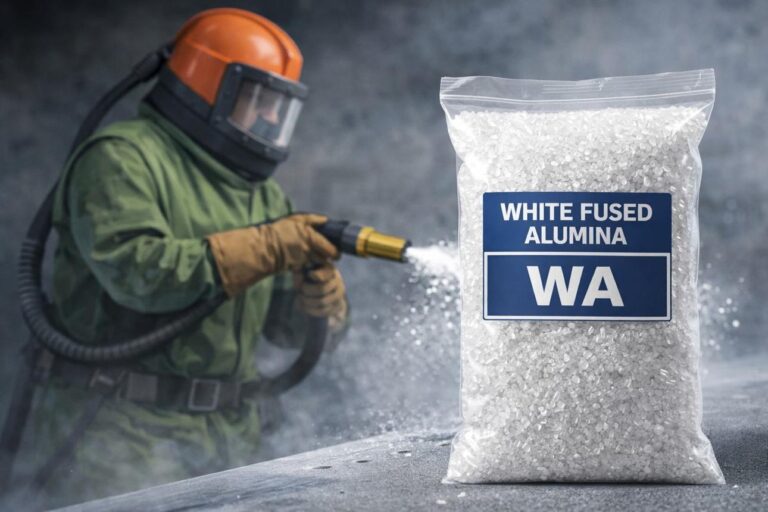
One of the most common uses of corundum is abrasive blasting.
White corundum abrasive grains are used to remove rust, oxide layers, coatings, and surface contaminants from metal components.
Its angular particles provide effective surface cleaning and help create a suitable surface profile before painting, coating, or further processing.
Typical applications include:
- Metal surface cleaning
- Rust and oxide removal
- Surface preparation before coating
- Precision blasting of industrial components
- Cleaning of selected hard surfaces
3.2 Grinding and Abrasive Tools
White corundum is widely used in the production of bonded abrasive tools, including grinding wheels, abrasive stones, and mounted points.
Its hardness and cutting properties make it suitable for grinding applications involving hardened steel, tool steel, and other metal materials.
It is particularly useful when users require efficient grinding performance and controlled material removal.
3.3 Precision Polishing and Surface Finishing

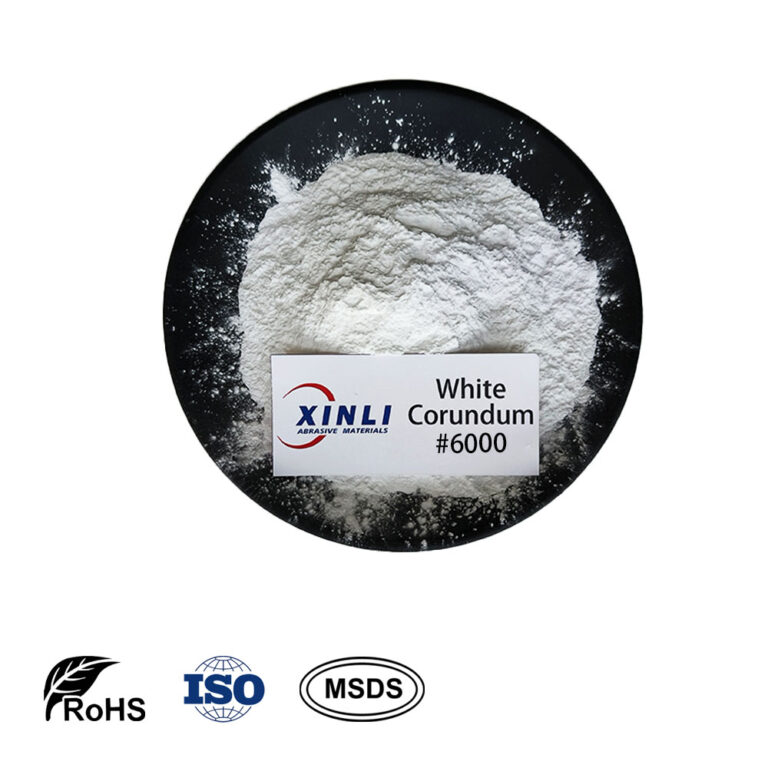
Fine white corundum powder can be used for precision polishing and surface finishing.
Depending on particle size and processing requirements, it helps remove minor surface imperfections and improve surface smoothness.
Typical applications include:
- Metal polishing
- Precision component finishing
- Surface refinement
- Lapping and polishing compounds
- Industrial finishing processes
3.4 Refractory Materials
White fused alumina is also used in refractory manufacturing because of its high alumina content and thermal stability.
It can be incorporated into refractory castables, shaped refractory products, and other high-temperature materials.
These products are used in industrial furnaces, kilns, and other high-temperature processing equipment.
3.5 Ceramic and Advanced Material Manufacturing
White corundum can also serve as a raw material or functional component in selected ceramic and advanced material applications.
Its hardness, chemical composition, and thermal properties make it useful in certain technical ceramic formulations and wear-resistant products.
4. White Corundum vs. Brown Corundum
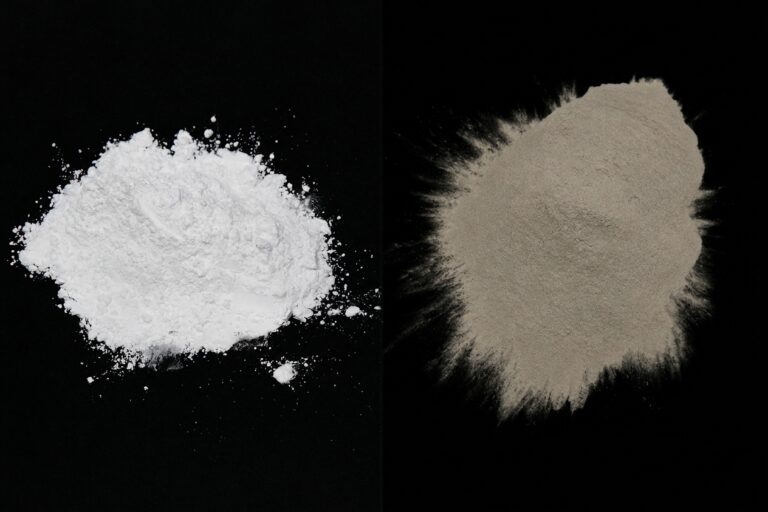
White corundum and brown corundum are two important types of fused alumina used in the abrasive industry.
Although both have high hardness and are manufactured through electric arc furnace processes, they differ in chemical composition, appearance, and typical applications.
| Comparison | White Corundum | Brown Corundum |
|---|---|---|
| Common Name | White Fused Alumina | Brown Fused Alumina |
| Main Component | Al₂O₃ | Al₂O₃ |
| Al₂O₃ Content | Typically ≥99.5% | Typically ≥95% |
| Appearance | White | Brown |
| Mohs Hardness | Approximately 9.0 | Approximately 9.0 |
| Purity | Higher | Lower than WFA |
| Main Applications | Precision grinding, polishing, blasting | General grinding, blasting, refractory materials |
White corundum is generally preferred for applications requiring higher purity and lower impurity levels.
Brown corundum is often selected for general-purpose abrasive applications where cost efficiency and strong grinding performance are important.
5. Different Particle Sizes of White Corundum
White corundum is available in different particle sizes to meet the requirements of various industrial applications.
The selection of grain size directly affects cutting efficiency, surface roughness, and finishing quality.
| Particle Size | Typical Form | Common Applications |
|---|---|---|
| F8–F24 | Coarse grains | Heavy-duty grinding, blasting |
| F30–F60 | Medium grains | Grinding and surface preparation |
| F80–F120 | Fine grains | Precision grinding and finishing |
| F150–F220 | Fine powder | Fine polishing and surface finishing |
| F240 and finer | Micro powder | Precision polishing and advanced finishing |
The actual particle size distribution depends on the applicable FEPA, JIS, or other customer specifications.
When purchasing white corundum, buyers should confirm the required grit standard, particle size distribution, and application requirements with the manufacturer.
6. How to Choose the Right White Corundum?
Choosing the right white corundum depends on the intended application and processing conditions.
Here are several important factors to consider:
Particle Size: Coarse grains are generally suitable for aggressive grinding and blasting, while finer particles are used for precision finishing and polishing.
Purity Requirements: For applications requiring low contamination, buyers should pay attention to the Al₂O₃ content and impurity levels.
Grain Shape: Angular abrasive grains are generally preferred for cutting, grinding, and surface preparation.
Application Requirements: Different applications require different abrasive grades. For example, blasting and precision polishing should not necessarily use the same particle size.
Quality Consistency: Stable chemical composition and particle size distribution are important for maintaining consistent production performance.
Working with an experienced manufacturer can help buyers select the appropriate grade for their specific industrial requirements.
7. Why Choose a Reliable White Corundum Manufacturer?
For industrial buyers, selecting a reliable white corundum manufacturer is essential for maintaining product quality and production efficiency.
A professional manufacturer should provide:
- Consistent chemical composition
- Accurate particle size classification
- Stable production capacity
- Strict quality control
- Customized grain size options
- Technical support and product documentation
These factors help ensure that white corundum meets the requirements of different abrasive, refractory, and precision processing applications.
Conclusion
Corundum is a highly versatile aluminum oxide material with excellent hardness and wear resistance. It is widely used in abrasive blasting, grinding tools, polishing, refractory manufacturing, and ceramic production.
Among its industrial varieties, White Corundum (White Fused Alumina) stands out for its high Al₂O₃ content, low impurity levels, and effective abrasive performance.
Understanding what corundum is and what it is used for can help industrial buyers make better decisions when selecting abrasive materials.
If you are looking for white corundum for grinding, blasting, polishing, or refractory applications, choosing the right particle size and quality grade is essential for achieving reliable results.
Contact us to learn more about our white fused alumina products and find a suitable abrasive solution for your application.
8. Frequently Asked Questions About White Corundum
Q1: Is white corundum the same as white fused alumina?
Yes. White corundum and white fused alumina (WFA) refer to the same industrial abrasive material. Both are primarily composed of aluminum oxide (Al₂O₃).
Q2: Is corundum harder than aluminum oxide?
Corundum is the crystalline mineral form of aluminum oxide. Its Mohs hardness is approximately 9.0, making it one of the hardest naturally occurring minerals.
Q3: What is white corundum used for?
White corundum is commonly used for abrasive blasting, precision grinding, polishing, refractory materials, and selected ceramic applications.
Q4: What is the difference between white corundum and brown corundum?
White corundum has higher alumina purity and lower impurity levels, while brown corundum is generally used for more economical, general-purpose grinding and blasting applications.
Q5: What particle sizes are available for white corundum?
White corundum is available in various grain sizes, including F8–F220 and finer micro-powder grades. The appropriate size depends on the application and required surface finish.