1. Why White Aluminum Oxide Is Used for Glass Sandblasting
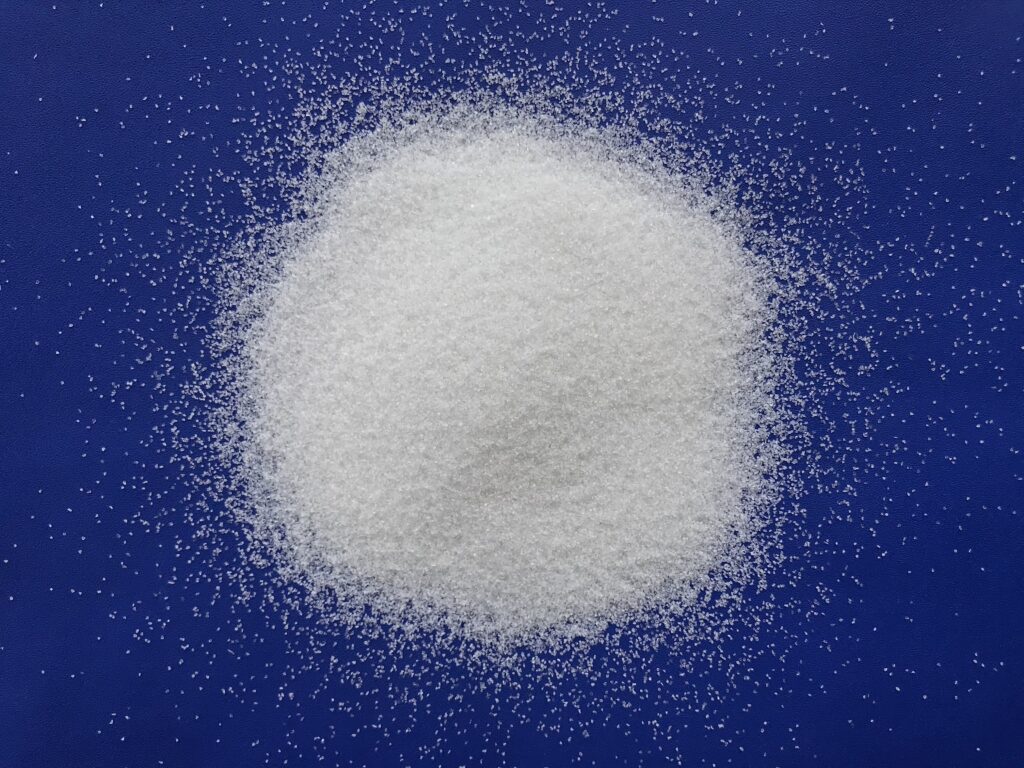
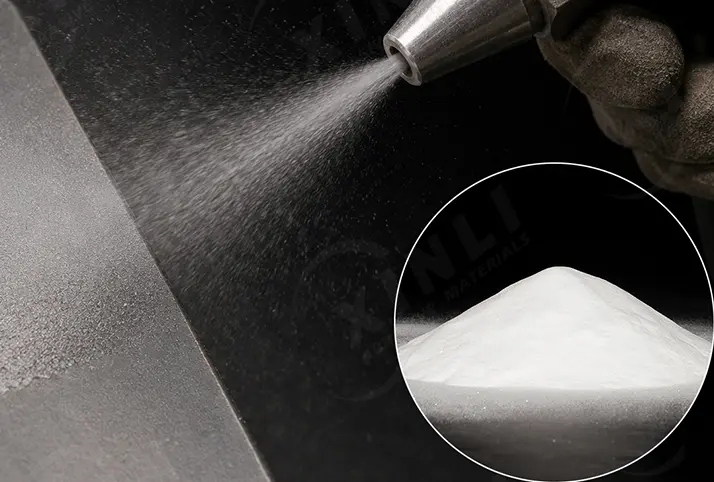
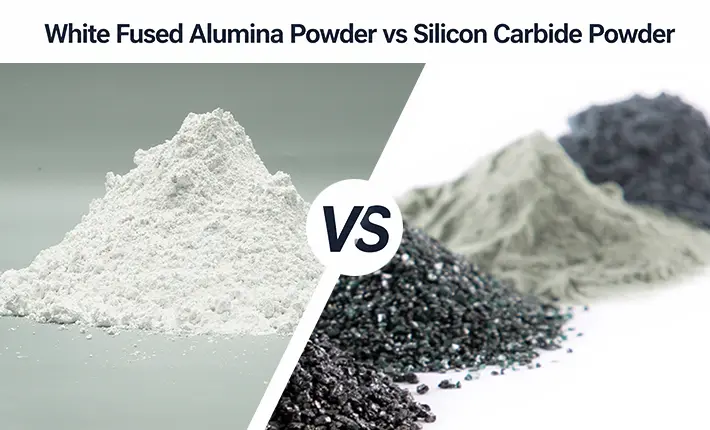
- White aluminum oxide blasting media is a high-purity, angular abrasive material widely used for glass sandblasting. It is also known as white fused alumina blasting media, white corundum blasting media, or white aluminum oxide abrasive.
- For glass processing, the purpose of blasting is different from metal rust removal. Metal blasting often focuses on cleaning rust, oxide scale, or old coating. Glass sandblasting focuses more on surface appearance, frosted effect, light diffusion, pattern clarity, edge control, and surface uniformity.
- Because glass is brittle, the abrasive must be selected carefully. If the blasting media is too coarse or the blasting pressure is too high, the glass surface may become too rough, the pattern edge may lose definition, or thin glass may be damaged. If the media is too fine, the process may become slow and the frosted effect may not be strong enough.
- This is why particle size selection is the most important point when buying white aluminum oxide blasting media for glass sandblasting.
2. What Is White Aluminum Oxide Blasting Media?
White aluminum oxide is produced from industrial alumina powder by high-temperature melting in an electric arc furnace. After cooling, crushing, magnetic separation and screening, it is processed into different grit sizes for blasting, grinding, lapping, polishing and surface treatment.
For glass sandblasting, white aluminum oxide has several advantages:
1. High hardness and strong cutting ability
2. Sharp angular particles for effective surface frosting
3. White color and low contamination
4. Lower iron content compared with many mineral abrasives
5. Stable particle size options
6. Suitable for clean and decorative glass surface treatment
White aluminum oxide does not simply scratch the glass; instead, it creates a controlled layer of micro-roughness on the glass surface. This transforms the transparent glass surface into a frosted, matte, translucent, or decorative finish.
3. Typical Glass Sandblasting Applications
White aluminum oxide blasting media can be used for various glass products and surface finishes.
Frosted Glass Panels
Used for doors, windows, office partitions, shower glass and interior decoration. The goal is to create a uniform matte surface while keeping light transmission.
Glass Logo and Pattern Blasting
Used for text, logos, decorative patterns and artistic designs. A masking film or stencil is usually applied to protect the area that should remain clear.
Glass Bottles and Cosmetic Packaging
Used for perfume bottles, wine bottles, cosmetic containers and premium packaging. The surface usually requires a fine and even Matte finish.
Architectural Decorative Glass
Used for interior glass walls, background panels, partitions and design glass. The surface effect must be consistent across large areas.
Wet Glass Sandblasting
Used when lower dust, smoother surface and better process control are required. It is often selected for finer glass surfaces and higher-quality decorative work.
4. How to Choose Particle Size for Glass Sandblasting
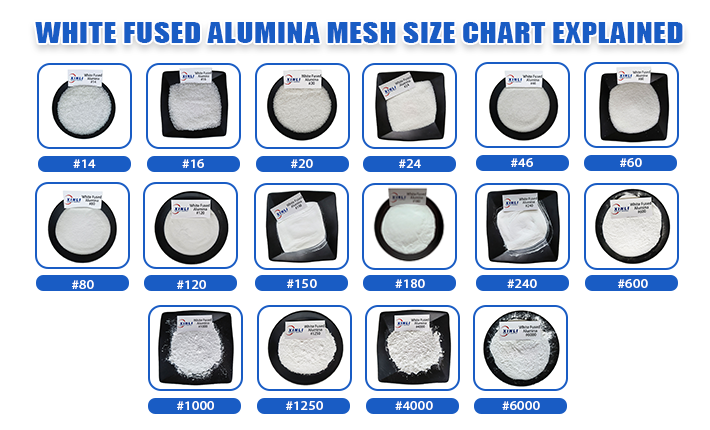
Particle size directly affects blasting speed, surface roughness, pattern clarity and final appearance.
Coarser grit removes material faster and creates a stronger frosted effect. Finer grit creates a smoother and more delicate surface but works more slowly.
Common size selection reference:
F36-F46:
Suitable for thick glass, strong frosting, deep matte effect and faster processing. The surface will be rougher, so this range is not usually the first choice for fine logos or thin glass.
F150-F180:
Suitable for fine patterns, thinner glass and glass products that require a smoother hand feel. Processing speed is slower, but the surface is more delicate.
F220 and finer:
Suitable for very light surface treatment, fine matte effect or special applications where low surface roughness is required. Testing is recommended because the final effect depends strongly on equipment and pressure.
5. Size Selection by Glass Application
Application: Thick glass strong frosting
Recommended size: F46-F60
Surface effect: Strong matte effect, higher roughness
Application: General frosted glass
Recommended size: F60-F100
Surface effect: Uniform matte finish, good efficiency
Application: Decorative glass pattern
Recommended size: F80-F120
Surface effect: Clear pattern, controlled surface texture
Application: Glass bottle matte finish
Recommended size: F100-F150
Surface effect: Fine and even surface
Application: Logo and text blasting
Recommended size: F100-F180
Surface effect: Better edge control
Application: Thin glass light blasting
Recommended size: F150-F220
Surface effect: Softer impact, finer finish
For buyers who are not sure which size to start with, F80 and F100 are common trial sizes for general frosted glass. For logos and fine decorative patterns, F100 and F120 are often a safer starting point. For a stronger frosted effect, F60 or F80 can be tested.
6. Dry Sandblasting vs Wet Sandblasting for Glass
Glass sandblasting can be done by dry blasting or wet blasting.
Dry Sandblasting
Dry blasting is common for frosted glass panels, architectural glass and decorative glass. It has higher processing efficiency and simpler equipment requirements. However, it produces more dust, so a good dust collection system and worker protection are necessary.
Wet Sandblasting
Wet blasting mixes water and abrasive media before impact. It can reduce dust and usually creates a softer, more uniform surface. It is suitable for glass bottles, fine logo work, decorative glass products and applications where dust control is important.
If the buyer needs high production efficiency, dry blasting is often selected. If the buyer needs a finer surface and better dust control, wet blasting may be more suitable.
7. Common Problems in Glass Sandblasting
Uneven Frosted Surface
This may be caused by unstable particle size, uneven pressure, inconsistent nozzle movement or dirty glass surface. Use blasting media with stable grading and keep the blasting distance and speed consistent.
Pattern Edge Is Not Clear
This may happen when the grit is too coarse, pressure is too high, the masking film is not attached well, or blasting time is too long. Try F100-F150 and check the stencil quality.
Surface Is Too Rough
The abrasive size may be too coarse or blasting pressure may be too high. Try a finer size, such as changing from F60 to F100, or reduce pressure.
Processing Speed Is Too Slow
The abrasive may be too fine, the pressure may be too low, or the media may have been reused too many times. Try a slightly coarser size such as F80 or F100.
Glass Chipping or Local Damage
This may be caused by thin glass, high pressure, close nozzle distance or coarse abrasive. Reduce pressure, increase distance and test finer grit before bulk processing.
8. What Buyers Should Check Before Purchase
When buying white aluminum oxide blasting media for glass sandblasting, buyers should confirm more than only the price.
Important purchase points include:
Particle size:
This controls the final frosted effect and processing speed.
Particle size distribution:
Stable distribution helps create a uniform glass surface.
Al2O3 content:
Higher purity supports stable hardness and abrasive performance.
Fe2O3 content:
Lower iron content helps reduce contamination risk.
Magnetic material:
Important for clean surface treatment.
Dust content:
Too much fine dust may make the blasted surface uneven and increase dust collection pressure.
Particle shape:
Angular particles provide effective surface cutting.
Batch consistency:
Important for factories that need the same surface effect in repeated production.
For glass applications, particle size distribution and dust content are especially important. A low price material with unstable grading may cause uneven surface finish and rework.
FAQ
Can white aluminum oxide blasting media be used for glass sandblasting?
Yes. White aluminum oxide is hard, sharp and clean, so it is suitable for frosted glass, logo blasting, glass bottle matte finish and decorative glass treatment.
What size is commonly used for glass sandblasting?
F60-F100 is commonly used for general frosted glass. F100-F150 is often used for logo and pattern blasting. F150-F220 can be used for finer surface effects.
Is coarser grit always better for glass blasting?
No. Coarser grit works faster and creates a stronger matte effect, but it also makes the surface rougher and may damage thin glass. Finer grit creates a smoother finish but works more slowly.
Is dry blasting or wet blasting better for glass?
Dry blasting is efficient and common for decorative glass panels. Wet blasting reduces dust and can create a finer, more uniform surface.
Can white aluminum oxide blasting media be reused?
Yes, it can be reused, but the particles will gradually become finer and less sharp. The surface effect may change after repeated use, so new media should be added regularly.
Why should buyers not choose only by price?
Because particle size, dust content, hardness, particle shape and batch consistency all affect the final frosted glass surface. Unstable media may cause uneven finish and rework.
Atte finish or logo blasting, please send your target surface effect, glass type, blasting method, required grit size and order quantity. We can recommend a suitable white aluminum oxide blasting media and provide samples, COA and quotation.