White Fused Alumina Price is one of the most important considerations for manufacturers and industrial buyers when purchasing high-quality white corundum abrasive materials. Whether you need white fused alumina for sandblasting, grinding wheels, coated abrasives, polishing, or refractory production, understanding the factors behind its price can help you make better purchasing decisions.
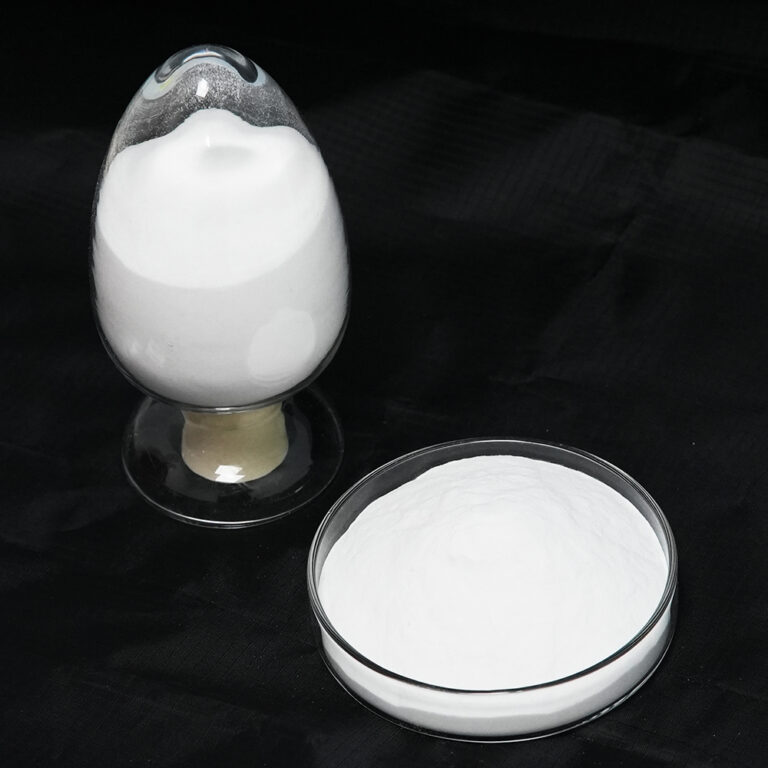
White fused alumina (WFA), also known as white aluminum oxide or white corundum, is a synthetic abrasive produced by melting high-purity alumina in an electric arc furnace. It is known for its high hardness, sharp cutting edges, chemical stability, and excellent grinding performance.
However, not all white fused alumina products have the same price. Different grit sizes, chemical compositions, sodium content, particle distributions, and processing requirements can result in significant cost differences.
For international buyers, the final purchasing cost also depends on order quantity, packaging, shipping arrangements, and trade terms such as FOB, CIF, and EXW.
In this guide, we explain how white fused alumina is priced, what affects its market value, how different grades compare, and what buyers should consider before requesting a quotation from a manufacturer.
1. What Is White Fused Alumina and Why Does Its Price Vary?
White fused alumina is a high-purity artificial corundum material mainly composed of aluminum oxide (Al₂O₃). It is manufactured through a high-temperature electric fusion process using alumina as the primary raw material.
After melting and cooling, the material is crushed, shaped, screened, and classified into different grain sizes according to customer requirements and international standards.
Its main characteristics include:
- High hardness and excellent abrasion resistance.
- High-temperature resistance.
- Good chemical stability.
- Sharp and angular grain structure.
- Low magnetic impurity levels when properly processed.
- Consistent grinding and surface-treatment performance.
These properties make WFA suitable for a wide range of industrial applications.
Why Are White Fused Alumina Products Priced Differently?
The price difference mainly comes from the level of processing and quality control required for each product.
For example, coarse white fused alumina grains used in refractory applications may require relatively straightforward crushing and screening. Fine abrasive grains and micro powders require more precise milling, classification, and particle-size control.
Similarly, a standard abrasive grade and a specially controlled low-sodium grade may have different production costs even when their nominal particle sizes are identical.
Therefore, buyers should not compare products based only on the name “White Fused Alumina.” The complete technical specification must be considered.
2. What Is the Current White Fused Alumina Price?
The White Fused Alumina Price depends on the product grade, specification, order volume, and delivery conditions.
There is no single international price that applies to every WFA product. Public market listings and price assessments show differences between coarse fused alumina, standard abrasive grains, and more finely processed products.
For reference, a public market listing for white fused alumina with a minimum 99% content and F36 grit reported a price of approximately USD 776.53 per metric ton on September 21, 2026. This is a specific market reference, not a universal quotation for all WFA grades. ScrapMonster
The U.S. Geological Survey’s 2026 Mineral Commodity Summaries also reports average U.S. import unit values for fused aluminum oxide. These figures distinguish crude material from ground and refined material, illustrating how processing level affects product value. They should not be interpreted as direct quotations for a particular Chinese WFA abrasive grade. USGS Publications
Indicative White Fused Alumina Price Differences by Product Type
| Product category | Typical processing requirements | Relative price level |
|---|---|---|
| Coarse WFA grain | Crushing and screening | Lower |
| Standard abrasive grit | Controlled grain sizing | Medium |
| Fine abrasive grit | More precise classification | Medium to high |
| WFA micro powder | Fine milling and particle classification | High |
| Precision polishing powder | Strict particle-size control | Higher |
| Customized low-impurity WFA | Additional quality control | Specification-dependent |
These are relative price categories, not fixed market quotations. Actual prices should be confirmed against the required specification and delivery terms.
Why Should Buyers Avoid Comparing Only the Price per Ton?
A lower price does not always mean better purchasing value.
For example, two suppliers may quote the same F46 white fused alumina, but their products may differ in:
- Al₂O₃ content.
- Na₂O content.
- Fe₂O₃ and other impurities.
- Particle-size distribution.
- Oversized and undersized particle limits.
- Packaging weight and moisture protection.
- Batch consistency.
A material with inconsistent particle distribution may affect the performance of grinding wheels or coated abrasives. A slightly higher-priced product with reliable quality may provide better production efficiency and lower overall costs.
3. Nine Key Factors Affecting White Fused Alumina Price
Understanding the main cost drivers helps buyers evaluate quotations and select suitable materials.
Factor 1: Raw Material Cost
The primary raw material for white fused alumina production is high-quality alumina.
The quality and purchasing cost of alumina directly affect the manufacturing cost of WFA. Changes in raw material supply, market demand, transportation, and supplier pricing can influence the final product price.
High-purity raw materials are especially important for applications that require strict chemical composition and low impurity levels.
When raw material costs increase, manufacturers may need to adjust their quotations to maintain consistent product quality and production standards.
Factor 2: Electricity and Energy Consumption
White fused alumina is produced through an electric arc furnace process that requires extremely high temperatures.
Electricity is therefore an important component of manufacturing costs.
Energy costs can be affected by:
- Industrial electricity tariffs.
- Regional energy supply.
- Furnace operating efficiency.
- Production schedules.
- Equipment maintenance.
- Energy management policies.
Manufacturers with efficient furnace operations and stable production arrangements may be better positioned to maintain competitive prices.
Factor 3: Al₂O₃ Purity and Chemical Composition
Aluminum oxide content is one of the most important indicators of WFA quality.
Higher-purity products generally require better raw materials and more careful production control.
Buyers may specify limits for:
- Al₂O₃.
- Na₂O.
- Fe₂O₃.
- SiO₂.
- Other relevant impurities.
For general abrasive applications, buyers should select a chemical specification suitable for their production process. For more demanding applications, stricter impurity limits may require additional controls and testing.
A quotation should always identify the chemical composition being offered. Do not assume that two products with the same product name have identical purity.
Factor 4: Grit Size and Particle Distribution
Particle size has a direct influence on WFA processing requirements and pricing.
Coarse grains are commonly used for sandblasting, heavy grinding, and refractory applications. Fine grains are used where smoother surface finishes or more precise grinding are required.
Common abrasive grit sizes include:
- F12
- F16
- F20
- F24
- F30
- F36
- F40
- F46
- F54
- F60
- F80
- F100
- F120
- F150
- F180
- F220
Finer abrasive grades generally require more precise classification and screening. Micro powders may also require additional milling and particle-size testing.
The final price depends not only on the nominal grit number but also on the required particle-size distribution and applicable standard.
Factor 5: Manufacturing Process and Processing Accuracy
The manufacturing process affects both the cost and performance of white fused alumina.
A typical production process includes:
- Raw material inspection.
- Electric arc furnace smelting.
- Cooling and solidification.
- Crushing and shaping.
- Magnetic separation.
- Screening and classification.
- Quality inspection.
- Packaging and storage.
Each stage requires equipment, labor, energy, and quality management.
For standard grains, ordinary crushing and screening may be sufficient. For fine powders or customized grades, additional processing may be needed to meet the customer’s specifications.
A supplier’s ability to control particle size, chemical composition, and batch consistency is an important part of the product’s value.
Factor 6: Order Quantity and Purchasing Volume
Order quantity is another important factor in determining the final White Fused Alumina Price.
Large-volume orders may allow manufacturers to arrange production more efficiently, optimize packaging, and reduce the average cost of handling and transportation.
Small orders may have a higher unit cost because of:
- Minimum production quantities.
- Separate production arrangements.
- Additional packaging costs.
- More complicated logistics.
- Higher freight costs per ton.
For buyers planning regular purchases, discussing annual or scheduled orders with a manufacturer may help improve price stability and supply planning.
Factor 7: Packaging Requirements
Packaging affects storage, transportation, handling, and product protection.
Common WFA packaging options include:
| Packaging Type | Typical Application |
|---|---|
| 25 kg bags | Small-volume orders and manual handling |
| 25 kg bags + 1 MT jumbo bags | Industrial export shipments |
| 1 MT jumbo bags | Bulk industrial transportation |
| Customized packaging | Special customer requirements |
Packaging costs may increase when buyers require moisture-resistant inner liners, pallets, customized labels, or special loading arrangements.
For export orders, packaging should also be suitable for long-distance transportation and warehouse storage.
Factor 8: Market Supply and Demand
White fused alumina is an industrial material whose price can respond to changes in supply and demand.
Market conditions may be influenced by:
- Alumina availability.
- Electricity costs.
- Furnace operating rates.
- Environmental and production policies.
- Demand from abrasive manufacturers.
- Refractory industry demand.
- Export activity.
- International logistics conditions.
When raw material supply becomes tight or industrial demand increases, manufacturers may adjust their selling prices.
Buyers who purchase regularly should monitor market conditions and avoid relying on old quotations for new orders.
Factor 9: Shipping Costs and International Trade Terms
For international buyers, the quoted material price is only one part of the total purchasing cost.
Shipping expenses depend on the destination country, loading port, container availability, shipment volume, and freight market conditions.
The quotation may use different Incoterms:
- EXW: The buyer arranges transportation from the supplier’s premises.
- FOB: The seller delivers the goods on board the vessel at the agreed port.
- CIF: The seller covers cost, insurance, and freight to the named destination port.
- CFR: The seller covers cost and freight, while insurance is arranged separately by the buyer.
Always confirm the exact Incoterm and destination port before comparing supplier quotations.
A lower FOB price may not result in a lower total landed cost if freight, insurance, and destination charges are higher.
4. White Fused Alumina Price by Grit Size
Different grit sizes require different processing and classification methods. This is one reason why WFA products are priced differently.
Coarse White Fused Alumina
Coarse WFA grains are commonly used in refractory materials, sandblasting, and heavy-duty surface treatment.
Typical sizes include:
- 0–1 mm
- 1–3 mm
- 3–5 mm
- 5–8 mm
These products are generally produced through crushing and screening. Their price is influenced by grain composition, size distribution, and application requirements.
Medium and Fine White Fused Alumina Grit
Medium and fine abrasive grains are widely used in grinding wheels, coated abrasives, and precision surface preparation.
Common sizes include F24, F36, F46, F60, F80, F100, F120, F150, F180, and F220.
These grades require controlled particle-size distribution to achieve consistent abrasive performance.
White Fused Alumina Micro Powder
WFA micro powders are used for fine grinding, polishing, lapping, and specialized industrial applications.
Their production may involve additional milling, classification, and particle-size inspection.
The finer the required particle distribution, the more important processing accuracy becomes. This can increase production costs and the final quotation.
5. White Fused Alumina Price for Different Applications
The intended application is an important part of selecting the right WFA grade.
Abrasive materials used for sandblasting do not necessarily need the same specifications as those used in precision polishing or refractory production.
WFA for Sandblasting
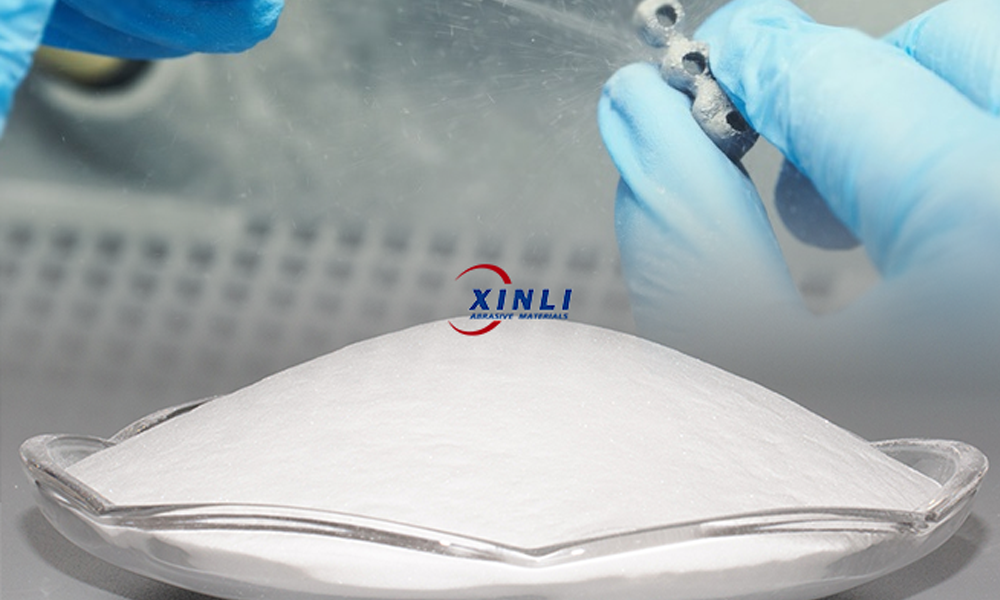
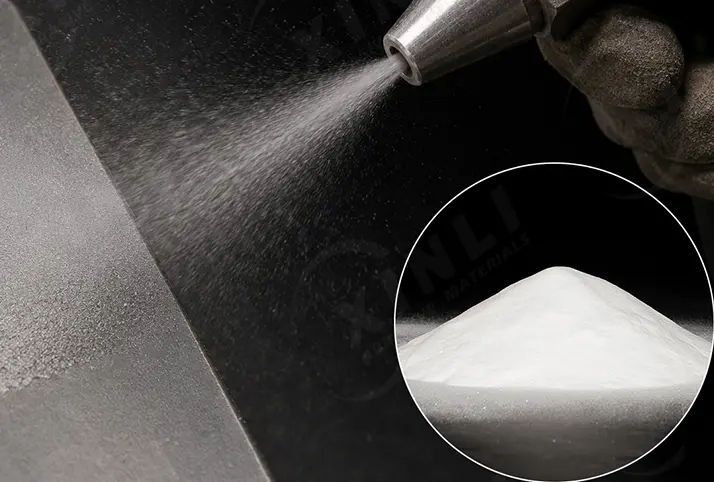
White fused alumina is used for surface cleaning, rust removal, and preparation before coating.
Important purchasing specifications include:
- Grit size.
- Hardness.
- Grain shape.
- Chemical composition.
- Reusability requirements.
- Dust and impurity control.
Buyers should choose a grade based on the material being treated and the desired surface finish.
WFA for Grinding Wheels
Grinding wheel manufacturers use WFA because of its hardness, sharp cutting edges, and thermal stability.
Important factors include:
- Grain-size consistency.
- Grain shape.
- Chemical composition.
- Bulk density.
- Compatibility with the bonding system.
For grinding-wheel production, stable quality between batches is often more important than simply choosing the lowest-priced material.
WFA for Coated Abrasives
White fused alumina is also used in abrasive belts, sanding discs, and abrasive papers.
The particle-size distribution and grain characteristics influence cutting performance, surface finish, and product consistency.
Manufacturers should confirm the required grit standard and grading specifications before placing an order.
WFA for Refractory Applications
In refractory production, white fused alumina is used in high-temperature materials and wear-resistant components.
Common product forms include coarse aggregates, fine grains, and powders.
Chemical composition, grain size, and thermal stability should be considered when selecting refractory-grade WFA.
6. How to Compare White Fused Alumina Suppliers
When comparing suppliers, buyers should evaluate more than the quoted price.
A reliable supplier should be able to provide clear product specifications, consistent quality, and suitable export services.
Check the Chemical Composition
Ask for a chemical analysis report showing the main composition and relevant impurity levels.
For example, confirm the specified Al₂O₃ content and the limits for Na₂O, Fe₂O₃, and SiO₂.
The actual requirements should depend on the application and agreed product grade.
Confirm the Grit Standard
Make sure the supplier identifies the grading standard used for the product.
FEPA, JIS, and other standards may use different grading systems. A nominal grit number alone may not provide enough information to confirm that two products are equivalent.
Request a Particle-Size Distribution Report
For abrasive grains and micro powders, particle-size distribution is essential.
Ask about:
- Main particle-size range.
- Oversized particle content.
- Undersized particle content.
- Testing method.
- Applicable grading standard.
This is particularly important for grinding wheels and precision surface treatment.
Evaluate Production Capacity and Quality Control
A professional manufacturer should have established production procedures and quality inspection processes.
Before purchasing, buyers can ask about:
- Manufacturing facilities.
- Production capacity.
- Quality inspection equipment.
- Batch traceability.
- Sample availability.
- Export experience.
These factors help buyers assess whether a supplier can support long-term purchasing requirements.
7. How to Get an Accurate White Fused Alumina Price Quotation
To receive a useful quotation, buyers should provide enough information for the manufacturer to identify the correct product.
A complete inquiry should include:
| Required Information | Example |
|---|---|
| Product | White Fused Alumina |
| Grit Size | F24 / F46 / F80 |
| Chemical Specification | Required Al₂O₃ and impurity limits |
| Application | Sandblasting / Grinding Wheels |
| Quantity | 1 MT / 5 MT / 20 MT |
| Packaging | 25 kg bags / Jumbo bags |
| Destination | Country and destination port |
| Trade Term | FOB / CIF / EXW |
The more detailed the inquiry, the easier it is for the manufacturer to provide a suitable quotation.
Why Is the Application Important?
A supplier may recommend different WFA grades depending on the intended use.
For example, a sandblasting buyer may prioritize grain shape and blasting performance, while a grinding-wheel manufacturer may require tighter control over grain distribution and batch consistency.
Providing the application helps avoid unnecessary specifications and reduces the risk of purchasing an unsuitable material.
Should You Request a Sample Before Bulk Purchasing?
For new suppliers or customized specifications, requesting a sample is a practical step.
A sample allows buyers to check:
- Appearance.
- Particle-size distribution.
- Chemical composition.
- Performance in the intended application.
For larger orders, buyers may also request a batch certificate or arrange third-party inspection based on the purchasing agreement.
8. Why the Lowest White Fused Alumina Price Is Not Always the Best Choice
Choosing a supplier based only on the lowest quotation can create problems during production.
A very low price may be associated with differences in raw material quality, particle classification, impurity control, or packaging.
Potential risks include:
- Chemical composition outside the agreed specification.
- Inconsistent grit distribution.
- Excessive oversized or undersized particles.
- High impurity content.
- Poor packaging protection.
- Unstable batch quality.
- Delayed delivery.
For industrial buyers, the actual cost should include not only the purchase price but also material performance, production efficiency, rejection rates, and delivery reliability.
A supplier offering consistent quality and dependable delivery may provide better long-term value than one offering an unusually low initial price.
9. Why Choose a Professional White Fused Alumina Manufacturer?
Choosing a manufacturer with stable production capabilities can help ensure reliable supply and consistent product quality.
Zhengzhou Xinli Wear-Resistant Material Co., Ltd. specializes in the production and supply of abrasive materials, including white fused alumina.
When selecting WFA for different industrial applications, buyers can discuss their required specifications directly with the manufacturer.
Key purchasing considerations include:
- Suitable WFA grades for different applications.
- Multiple grit sizes and customized specifications.
- Chemical composition and particle-size requirements.
- Export packaging options.
- Technical communication and product selection support.
- Bulk order and long-term supply arrangements.
Instead of choosing a product based only on its nominal grit size, buyers should communicate their application and technical requirements to identify the most suitable material.
Contact Xinli for White Fused Alumina Price and Product Information.
Send your required grit size, quantity, application, and destination to receive a quotation based on your purchasing needs.
Frequently Asked Questions About White Fused Alumina Price
1. What is the White Fused Alumina Price per ton?
There is no single fixed price for all white fused alumina products. The quotation depends on grit size, Al₂O₃ content, impurity limits, processing requirements, order quantity, packaging, and delivery terms. Buyers should request a quotation based on their exact specifications.
2. Why is white fused alumina more expensive than some other abrasive materials?
White fused alumina is produced from high-purity alumina through an electric arc furnace process. Raw material quality, energy consumption, crushing, classification, and chemical control all contribute to its manufacturing cost.
3. Does grit size affect White Fused Alumina Price?
Yes. Different grit sizes require different processing and classification methods. Fine grains and micro powders may require additional milling and more precise particle-size control, which can increase production costs.
4. Is higher Al₂O₃ content always more expensive?
Higher purity requirements can increase raw material and quality-control costs. However, the final price also depends on particle size, processing, order quantity, and other specifications.
5. What is the difference between white fused alumina and white aluminum oxide?
They are commonly used as names for the same synthetic abrasive material. White fused alumina is also known as white aluminum oxide or white corundum.
6. Which grit sizes are commonly available?
Common abrasive grades include F12, F16, F20, F24, F30, F36, F40, F46, F54, F60, F80, F100, F120, F150, F180, and F220. Fine micro powder grades are also available according to the manufacturer’s production range.
7. What is the difference between FOB and CIF prices?
FOB generally covers the seller’s responsibilities up to loading the goods on board the vessel at the agreed port. CIF includes the cost of the goods, insurance, and freight to the named destination port. Buyers should confirm the precise Incoterm and named location.
8. Can I order a small quantity of white fused alumina?
Small orders may be possible depending on the supplier’s stock, production schedule, and packaging arrangements. However, the unit price and shipping cost per ton may be higher than those for bulk orders.
9. How can I get an accurate White Fused Alumina Price quotation?
Provide the product name, grit size, chemical requirements, application, order quantity, packaging, and destination port. The manufacturer can then prepare a quotation based on the required product specification and delivery terms.
Conclusion: Get the Right White Fused Alumina at the Right Price
The White Fused Alumina Price is influenced by several factors, including raw material costs, electricity consumption, chemical composition, grit size, manufacturing processes, order quantity, packaging, and international shipping.
For industrial buyers, the best purchasing decision is not necessarily the lowest-priced product. It is the product that meets the required technical specifications, delivers consistent performance, and provides reliable supply at a competitive total cost.
Before placing an order, compare product specifications carefully, confirm the grading standard, and clarify the delivery terms.
If you are looking for a reliable white fused alumina supplier, contact Xinli with your required specifications and application details to request a quotation.