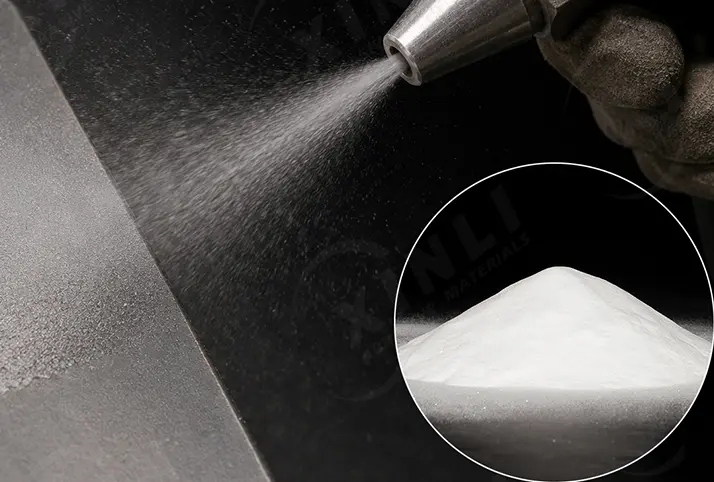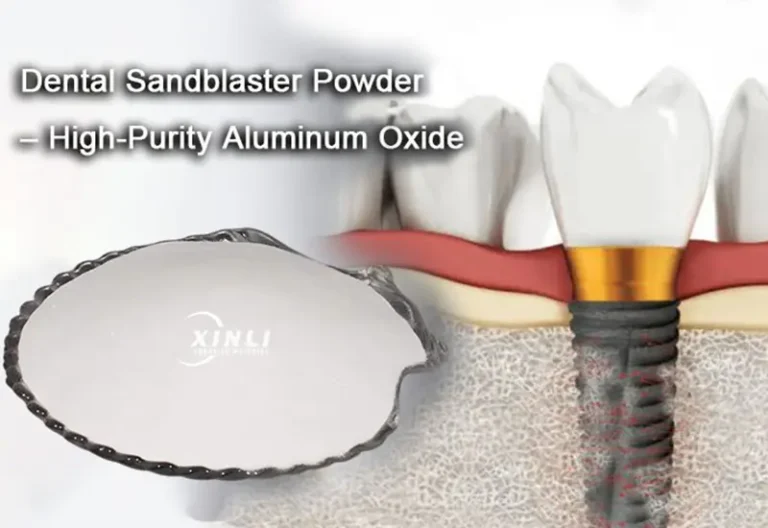
Many buyers compare white fused alumina powder and silicon carbide powder only by hardness. That is a useful starting point, but it is not enough for a stable purchase. In real production, the better powder is the one that gives the required surface result with acceptable cutting speed, predictable particle distribution and no unwanted contamination.
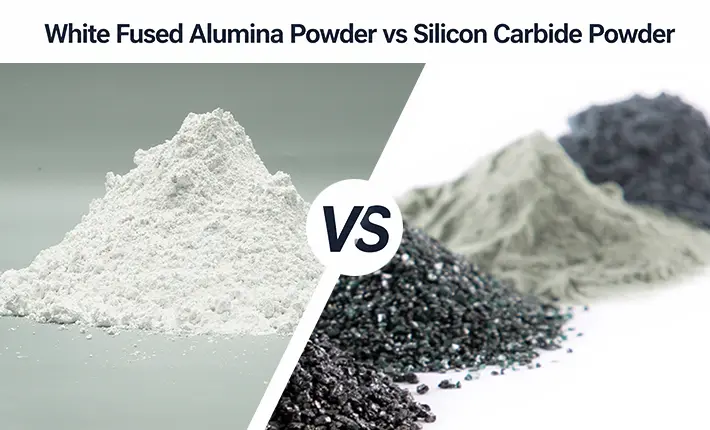
Both materials are used in lapping, polishing, precision blasting, ceramics, refractories and surface treatment. They can sometimes appear in the same supplier catalog, but they do not behave the same way. Silicon carbide powder usually cuts faster and feels sharper. White fused alumina powder is often selected where high Al2O3 purity, controlled finish, lighter color and lower contamination risk are more important than maximum cutting aggression.
This comparison is written for buyers who already know they need an abrasive powder, but are not sure which material should be tested first.
Quick Comparison Table
| Item | White fused alumina powder | Silicon carbide powder | Purchasing note |
|---|---|---|---|
| Main chemistry | High purity Al2O3 | SiC | Check chemical analysis when powder is used in ceramics or high-purity processes. |
| Mohs hardness | 9 | 9.2 | Higher hardness does not always mean better finish. |
| Cutting speed | Moderate to strong | Usually faster on hard and brittle materials | Fast cutting can also increase scratch risk. |
| Surface finish | Good control in fine finishing and precision powder use | More aggressive scratch pattern if the grade is not controlled | Test on the actual substrate before switching material. |
| Color and residue concern | White, clean appearance | Black or green depending on grade | Important for light-color products, ceramics, coatings and visible surfaces. |
| Common size language | FEPA micro grit, JIS powder, micron powder, mesh powder | FEPA, JIS, micron powder, mesh powder | The size system must be written clearly in the RFQ. |
The Real Difference Is How the Powder Fails
A good comparison should look at failure modes, not just material names. If a lapping process is too slow, silicon carbide powder may look attractive because of its sharp cutting action. If the same process leaves scratches that are too deep, white fused alumina powder may give better control. If a ceramic formulation is sensitive to chemistry, the buyer may care more about Al2O3 purity, Na2O level and trace impurities than about cutting speed.
For surface finishing, the wrong powder may pass a simple hardness check but fail the final appearance requirement. For precision powder use, oversized particles can create random scratches even when the average particle size looks correct. For ceramic or refractory applications, a small chemistry difference can affect sintering behavior, color or high-temperature stability.
When White Fused Alumina Powder Is Usually the Better Trial
White fused alumina powder is often a practical first trial when the buyer needs a clean, stable abrasive powder rather than the fastest possible cutting media. It is widely used where the process needs high Al2O3 content, controlled particle distribution and a lighter color.
Fine surface control
For polishing, lapping, fine blasting or surface preparation before coating, white fused alumina powder can offer a more controlled abrasive action. It is useful when the buyer needs to avoid overly aggressive scratches while still removing surface defects, oxides or light contamination.
Ceramic and refractory powder use
In ceramic and refractory formulations, the powder is not only an abrasive. It becomes part of the material system. Buyers should check Al2O3 content, Na2O level, Fe2O3 level, particle distribution and moisture. For low sodium requirements, the grade should be written clearly and confirmed with COA.
Light-color products and visible surfaces
White fused alumina powder is often preferred when color and residue appearance matter. It is a better starting point for buyers who do not want dark powder traces in light-color ceramics, coatings or fine surface finishing work.
When Silicon Carbide Powder Is Usually the Better Trial
Silicon carbide powder is normally considered when faster cutting and sharper abrasive action are required. It is widely used on hard, brittle or non-metallic materials such as stone, glass, ceramics and certain hard alloys. Green silicon carbide powder is often associated with higher purity and sharp cutting behavior, while black silicon carbide powder is commonly used in general abrasive and refractory applications.
The advantage of silicon carbide powder is also its risk. If the process needs a very smooth finish, or if the workpiece is easy to scratch, a SiC powder grade that is too coarse or poorly classified can create finish problems quickly. In these cases, buyers should not switch from white fused alumina powder to silicon carbide powder without a sample test.
Particle Size: The Point Buyers Should Not Simplify
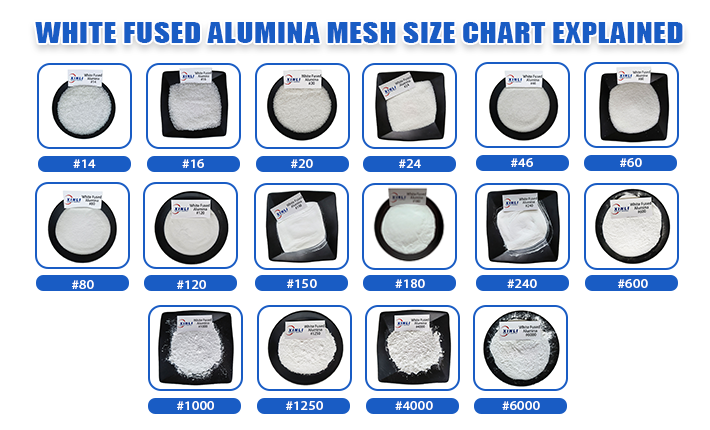
Powder grades are often ordered by micron size, JIS powder grade, FEPA micro grit or mesh. A buyer may say “10 micron powder” or “JIS #3000 powder,” but the supplier still needs to know the required particle distribution. D50 alone is not enough for many precision uses. Oversize particles, fine content and distribution width can change the final result.
| Size description | Useful for | What to confirm |
|---|---|---|
| Mesh powder | General fillers, rough powder use, some blasting | Screen size, oversize control, dust content |
| FEPA micro grit | Precision finishing, lapping, polishing | Official grade, particle distribution, batch consistency |
| JIS powder | Japanese customer specifications and fine powder use | JIS grade number and application requirement |
| Micron powder | Fine polishing, ceramics, specialty applications | D50, top cut, chemical analysis and moisture |
If the size requirement is not clear, request samples of two nearby grades. Testing one grade only may lead to a wrong conclusion about the material itself.
How to Compare Samples Correctly
A fair test should keep the process stable. Do not compare white fused alumina powder and silicon carbide powder with different particle sizes, different slurry concentration, different pressure, different wheel speed or different cycle time. If too many variables change at the same time, the test result will not explain which powder is better.
For lapping or polishing, record cutting rate, surface roughness, scratch pattern, cleaning difficulty and slurry behavior. For blasting, record pressure, nozzle distance, media flow, surface profile and visual finish. For ceramic or refractory use, record chemistry, sintering result, color, density and finished product performance.
FAQ
Is silicon carbide powder always better because it is harder?
No. Silicon carbide powder usually cuts faster, but white fused alumina powder may give better finish control, cleaner color and more suitable chemistry for certain applications.
Can white fused alumina powder replace silicon carbide powder?
Sometimes, but not automatically. The buyer should compare the actual substrate, required finish, cutting speed and particle size distribution.
Which powder is better for ceramics?
It depends on the ceramic system. White fused alumina powder is often considered when high Al2O3 purity and low sodium grades are required. Silicon carbide powder is used when SiC chemistry and sharp cutting behavior are suitable.
What particle size information should I request?
Ask for the size standard, grade, D50 or particle distribution, oversize control, chemical analysis and batch COA.
Should I test one grade or several grades?
For new applications, testing two nearby grades is usually more useful than testing only one. It helps separate material behavior from size behavior.