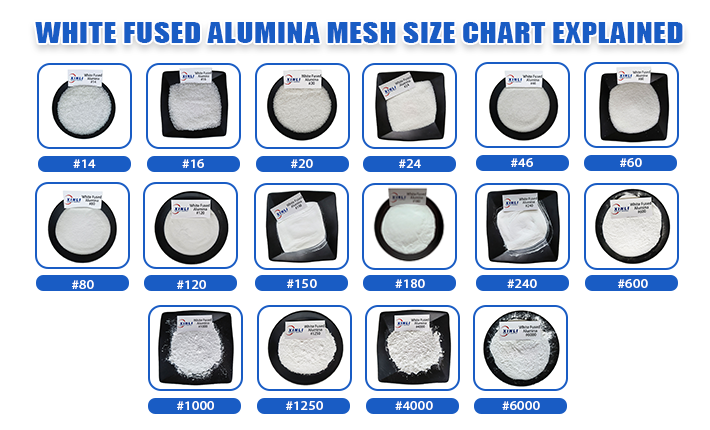
A white fused alumina mesh size chart is useful only when the buyer knows which sizing language is being used. In real RFQs, the same number can appear in very different ways: F120, P120, 120 mesh, #120, 120 grit or 120 µm. These expressions are easy to mix together, but they do not always describe the same abrasive product.
That is why a size chart should not be read like a simple price list. It should be read like a specification translator. The number affects cutting speed, surface roughness, dust level, wheel performance, coating adhesion, ceramic body behavior and polishing result. A wrong size may still look correct on the invoice, but it can fail during production.
This article explains white fused alumina size from a buyer’s working perspective: how to read common grit systems, where mesh descriptions are useful, where micron powder is safer, and what information should be written clearly before placing an order.
The First Question Is the Size Standard
When a buyer asks for white fused alumina, the material name only answers part of the question. The size standard answers the part that production actually feels. A grinding wheel factory, a coated abrasive producer, a blasting company and a precision lapping user may all buy white fused alumina, but they may not use the same size system.
| Size language | Where it is commonly used | Why it matters |
|---|---|---|
| FEPA F grit | Bonded abrasives, grinding wheels, vitrified wheels | Controls wheel cutting action, structure and dressing behavior. |
| FEPA P grit | Coated abrasives, sanding belts, abrasive paper | Used for coated products where scratch pattern and coating density matter. |
| Mesh | Blasting media, fillers, refractory materials, general powders | Describes screened particle range, but not the full particle distribution. |
| Micron powder | Lapping, polishing, precision blasting, ceramics | More suitable when fine particle distribution must be controlled. |
| JIS powder | Japanese standard powder applications | Useful when the drawing or customer specification follows JIS grades. |
Before comparing prices, confirm this standard first. If the quotation only says “white fused alumina 120,” it is not complete enough for stable purchasing.
Why F120 Is Not the Same as 120 Mesh
One common purchasing mistake is treating grit number and mesh number as the same thing. They both relate to particle size, but they come from different classification methods. FEPA grit grades follow abrasive grain standards. Mesh size comes from screen openings. Micron powder is normally described by particle diameter ranges.
For example, F120 white fused alumina may be suitable for a bonded abrasive formula, while 120 mesh white fused alumina may be requested for a screened powder or general blasting material. If the supplier replaces one with the other without checking the application, the buyer may receive a material that flows, cuts or finishes differently from expected.
The safest way is to write the size with its system: FEPA F120, FEPA P120, 120 mesh, JIS #1200 or 45 µm powder. The extra words prevent most size-related errors.
White Fused Alumina Size Chart for RFQ Review
The chart below is written for purchasing review, not for laboratory replacement of official standards. It helps buyers separate coarse abrasive grain, fine grit and powder-grade material before confirming the final TDS.
| Size range | Practical reading | Typical purchasing situation | Risk if specified poorly |
|---|---|---|---|
| F12-F36 | Coarse abrasive grain | Heavy grinding, rough blasting, refractory aggregate | Too coarse may create deep profile or unstable wheel structure. |
| F46-F80 | Medium abrasive grain | Grinding wheels, general blasting, surface cleaning | Wrong grade changes cutting speed and surface profile quickly. |
| F100-F220 | Fine abrasive grain | Fine grinding, sharpening, controlled finishing | Too much fine dust may affect bonding or finish consistency. |
| P grades | Coated abrasive sizing | Sanding belts, abrasive cloth, abrasive paper | Replacing P grit with F grit may change scratch pattern. |
| F230-F1200 | Micro grit range | Lapping, polishing, ceramics, precision finishing | Particle distribution becomes more important than name alone. |
| JIS powder grades | Fine powder classification | Japanese-market polishing, lapping and ceramic applications | Grade substitution should be checked against customer drawings. |
| Micron powder | Particle diameter specification | Precision blasting, polishing slurry, functional filler | Need D50, oversize control and contamination checks. |
Read the Chart Together with the Process
Grinding wheels
For bonded abrasive production, the size code should normally be FEPA F grit. The buyer should confirm grit size, Al2O3 content, Na2O level, bulk density, toughness and magnetic material. Two suppliers may both offer F60, but wheel performance can still differ if grain shape and fines content are not controlled.
Coated abrasives
For sanding belts or abrasive paper, FEPA P grit is usually the safer language. Scratch pattern is sensitive to the particle distribution. If a buyer only writes “white aluminum oxide 180,” the supplier should confirm whether P180 is required.
Blasting and surface preparation
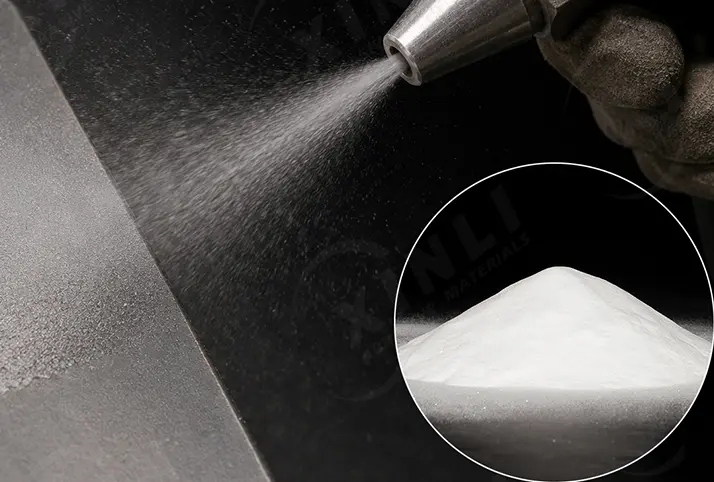
Blasting users often think in mesh ranges or practical profile results. A coarse size gives faster cleaning and a deeper surface profile. A finer size gives a smoother finish but may reduce cutting speed. The same abrasive can behave differently depending on air pressure, nozzle distance, recycling system and dust collection.
Precision powder use
For lapping, polishing, ceramic components or fine blasting, micron powder information is more useful than a simple mesh number. Buyers should ask for particle size distribution, oversize control and chemical analysis. For low sodium white fused alumina, Na2O content should also be written into the purchase requirement.
Common Size-Related Problems and What to Check
| Production problem | Possible size issue | What to ask the supplier |
|---|---|---|
| Surface is too rough | Particle size may be too coarse or oversize particles are present | Confirm grade standard, sieve result or particle distribution. |
| Cutting speed is too slow | Particle may be too fine or too rounded for the process | Check grit size, grain shape and application details. |
| Too much dust | Fine fraction may be high or material may not be cleaned well | Ask for fines control, dust removal and packing condition. |
| Batch result changes | Size distribution may not be consistent | Request batch COA and keep a retained sample for comparison. |
| Customer rejects finish | Wrong standard may have been used | Compare the drawing with FEPA F, FEPA P, mesh or micron notation. |
FAQ
When should I ask for micron powder instead of mesh powder?
Micron powder is better for precision blasting, lapping, polishing, ceramics and other applications where particle size distribution is important.
What size information should be included in a purchase order?
Include the material name, size standard, grade number, application, purity requirement, packing, quantity and any required documents such as COA, TDS or MSDS.
Why do two suppliers F60 white fused alumina perform differently?
Besides size, grain shape, toughness, bulk density, fines content, chemistry and magnetic material can affect the final performance.