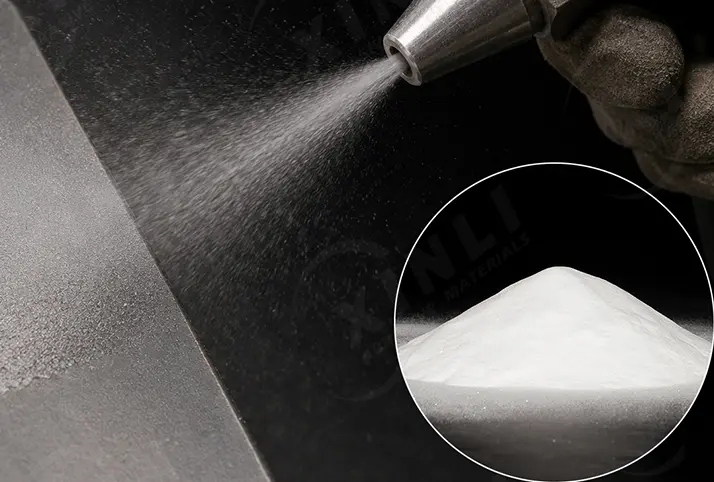
Dental sandblasting, also called dental air abrasion or airborne particle abrasion, is a controlled surface treatment process used in many dental laboratories and restorative workflows. It may be used to clean surfaces, increase mechanical retention, remove contamination, create micro-roughness, or prepare a surface before bonding, veneering, coating, repair or further laboratory processing. In this application, the abrasive is not selected only by price. Particle size, purity, consistency, dust level and packaging cleanliness all affect process repeatability.
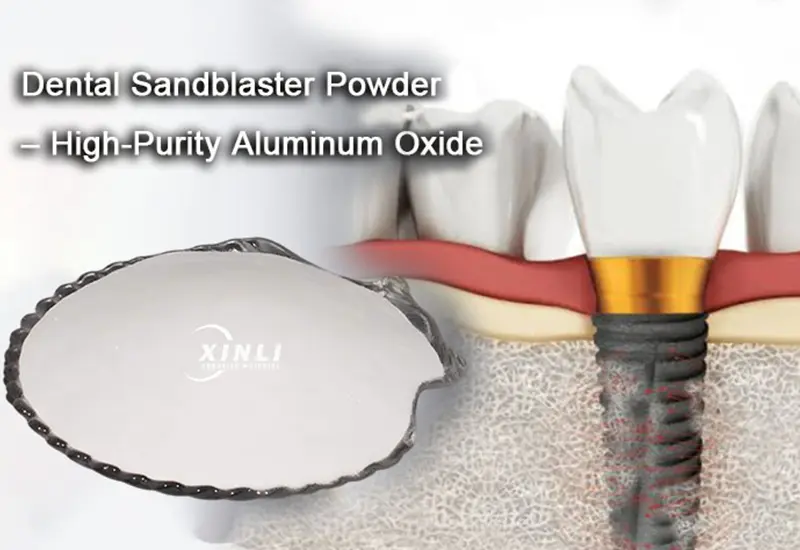
White fused alumina is widely used as a dental sandblasting abrasive because it is hard, angular, chemically stable and relatively low in iron contamination. For industrial buyers, the most important point is to treat dental sandblasting as a precision application. A product that is acceptable for general blasting may not be suitable for dental laboratory use if the particle size distribution is too wide, the dust content is high, or the packaging cannot protect the material from contamination.
What Is White Fused Alumina?
White fused alumina, often abbreviated as WFA, is a high-purity synthetic alumina abrasive produced by melting industrial alumina in an electric arc furnace. After cooling, crushing, magnetic separation and classification, it can be supplied as grit, powder or micron powder. In dental sandblasting, buyers normally ask for fine aluminum oxide blasting powder rather than coarse abrasive grain.
Common names in buyer inquiries include white fused alumina, white aluminum oxide, white alumina blasting powder, dental sandblasting alumina, aluminum oxide 50 micron and alumina air abrasion powder. These terms may refer to similar materials, but the required particle size and cleanliness must still be confirmed before quotation.
Why WFA Is Used in Dental Sandblasting
- High hardness helps create micro-roughness on dental alloys, ceramics and some restorative surfaces.
- Angular particle shape improves cutting and surface activation compared with rounded media.
- White color and low iron contamination risk support cleaner laboratory handling.
- Fine powder grades can be selected for controlled air abrasion equipment.
- Stable particle size distribution helps laboratories repeat the same surface effect across batches.
Typical Particle Sizes for Dental Applications
Dental laboratories use different alumina particle sizes according to the restoration material, surface condition, equipment and bonding protocol. There is no single universal size for all dental sandblasting. The dental material supplier, adhesive system and equipment instructions should always be followed. From a procurement point of view, the supplier should help the buyer confirm whether the requirement is a narrow micron powder, a standard mesh powder or a custom classified product.
| Particle size range | Typical dental lab use | Buyer notes |
| 25-30 micron | Gentle surface cleaning or fine surface conditioning | Used when a lower impact surface treatment is needed. Confirm whether the equipment can feed very fine powder smoothly. |
| 50 micron | Common starting size for ceramic, zirconia, metal and restorative surface treatment trials | Often requested by dental labs. Check distribution, dust level and packaging cleanliness. |
| 90-110 micron | Stronger roughening for metal frameworks or some laboratory repair processes | Creates a more aggressive texture. Test carefully on thin or delicate restorations. |
| 125 micron and above | Special cases requiring stronger abrasion | Not suitable for every dental surface. Use only when the process protocol requires it. |
How Dental Labs Use WFA in Surface Preparation
Zirconia and Ceramic Restorations
For zirconia and ceramic restorations, dental labs may use fine alumina abrasion to create a controlled surface before bonding or repair. A common trial size is 50 micron alumina, but the correct choice depends on the restoration material, wall thickness, equipment pressure and adhesive system. Buyers should avoid overly coarse powder if the goal is only light surface activation, because excessive abrasion can create surface defects or weaken thin areas.
Dental Alloys and Metal Frameworks
For cobalt-chromium, nickel-chromium or other dental alloy frameworks, alumina blasting can remove oxide layers and create a roughened surface for bonding or ceramic veneering. Particle sizes around 50-110 micron are often tested, depending on the metal, framework thickness and target retention. In this application, abrasive reusability, dust control and separation from other blasting media are important for clean lab operation.
Repair, Cleaning and Laboratory Adjustment
Dental laboratories also use alumina blasting for cleaning, repair preparation and local adjustment. The buyer should specify whether the powder will be used in a chairside microblaster, a dental laboratory sandblaster or a larger cabinet. Fine powders must flow evenly and should not contain coarse oversize particles that may create visible surface damage.
Quality Requirements for Dental Sandblasting Alumina
- Controlled particle size distribution with limited oversize particles.
- Low magnetic material and low iron contamination risk.
- Clean white appearance and stable batch color.
- Low dust and good flowability for dental blasting equipment.
- Moisture-resistant packaging, especially for fine powder shipments.
- Available COA, particle size report, TDS and MSDS when required by the buyer.
Grit vs Powder: Avoid a Common Purchasing Mistake
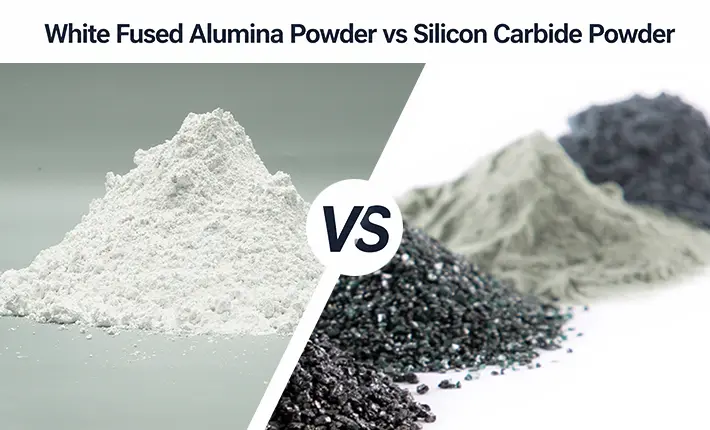
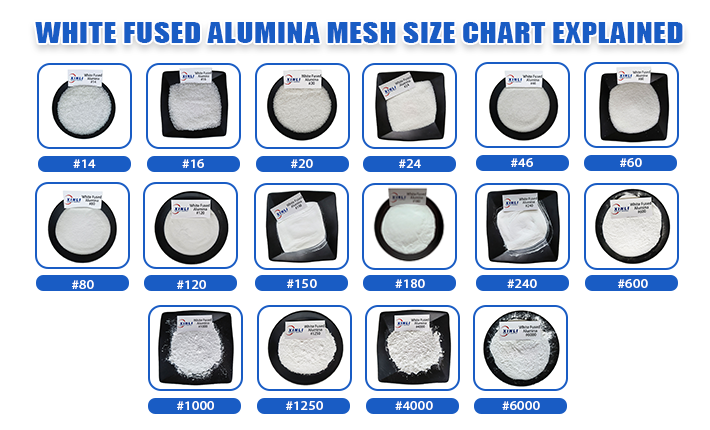
Dental buyers should not order coarse WFA grit if the application is dental sandblasting. FEPA F grit such as F80 or F120 is common in industrial blasting and abrasive tools, but dental sandblasting usually requires fine micron powder or carefully classified powder. If the inquiry only says ‘white fused alumina for dental use,’ the supplier should ask for particle size, equipment type and target surface process before quoting.
FAQ
Is white fused alumina used for dental sandblasting?
Yes. Fine white fused alumina or white aluminum oxide powder is commonly used in dental laboratory sandblasting and air abrasion surface preparation.
What particle size is common for dental sandblasting?
50 micron alumina is a common starting point, while 25-30 micron, 90-110 micron and other sizes may be selected according to the material and process protocol.
Can industrial blasting alumina be used in dental labs?
Not automatically. Dental use normally requires finer, cleaner and more controlled powder than general industrial blasting media.
Does WFA replace the dental material manufacturer’s instructions?
No. The restoration material, adhesive system and equipment instructions should always control the final process parameters.