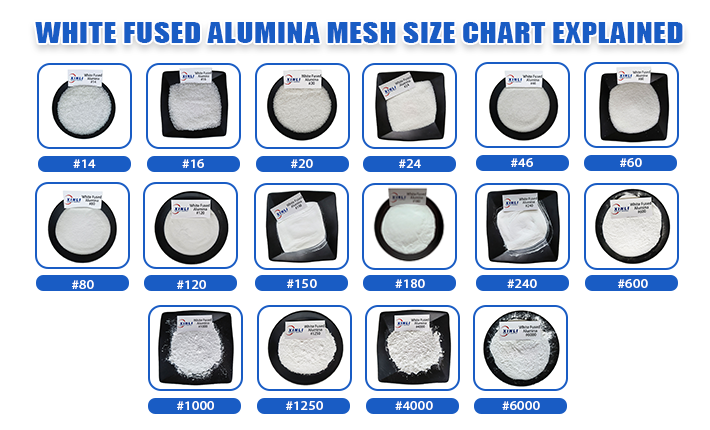
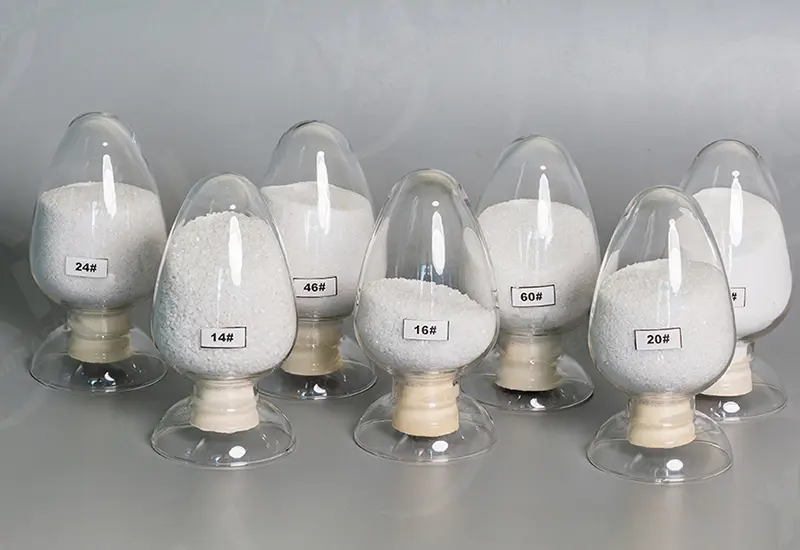
White fused alumina grain is widely used in industrial flooring, sandblasting, surface preparation, grinding wheels, anti-slip coatings, refractory materials, and wear-resistant systems. For buyers, the most important question is not only “What is white fused alumina grain?” but which grain size should be used for my application?
Choosing the wrong size can cause practical problems. If the grain is too coarse, the surface may become too rough or difficult to level. If it is too fine, the anti-slip effect, cutting force, or wear resistance may not be enough. This guide explains how to select white fused alumina grain based on real applications.
What Is White Fused Alumina Grain?
White fused alumina grain is a high-purity aluminum oxide abrasive made by melting alumina powder in an electric arc furnace. After cooling, crushing, shaping, magnetic separation, and screening, it is classified into different grain sizes.
It is also called:
- White fused alumina grain
- White aluminum oxide grain
- White corundum grain
- WFA grain
- White alumina abrasive grain
White fused alumina grain has high hardness, clean white color, low iron contamination, and good chemical stability. These properties make it suitable for applications where surface cleanliness, wear resistance, and stable particle size are required.
Size Selection Guide by Application
1. Epoxy Corundum Wear-Resistant Flooring
For epoxy corundum flooring, white fused alumina grain is added as a hard aggregate to improve wear resistance, anti-slip performance, and surface strength.
Common recommended sizes:
| Application | Recommended Size | Purpose |
| General epoxy wear-resistant flooring | #150 | Adds hardness and surface texture |
| Heavy-duty industrial flooring | #180 | Balances wear resistance and workability |
| Anti-slip decorative flooring | #220 | Finer texture, better visual finish |
| Museum, stadium, garage flooring | #180-#220 | Durable surface with controlled roughness |
In many flooring projects, #220 white fused alumina grain is commonly used because it provides wear resistance while keeping the surface relatively fine and easier to finish.
For high-traffic areas such as underground garages, workshops, electronics factories, automotive production lines, and stadium floors, white fused alumina grain can improve the service life of the coating.
Practical tip:
If the surface needs stronger anti-slip performance, use a slightly coarser grain. If the project requires a cleaner decorative finish, use a finer grain such as #220.
2. Sandblasting and Surface Preparation
White fused alumina grain is also used as a clean blasting media for stainless steel, aluminum alloy, titanium alloy, glass, molds, and precision components.
Common size selection:
| Application | Recommended Size | Surface Effect |
| Strong surface cleaning | F36-F60 | Fast cutting, rougher profile |
| General blasting | F60-F80 | Balanced cleaning and surface roughness |
| Fine surface preparation | F100-F120 | More controlled matte finish |
| Precision blasting | F150-F220 | Fine texture, lower surface damage |
For stainless steel or aluminum parts, white fused alumina is preferred because it has low iron contamination. This helps reduce the risk of rust spots or discoloration after blasting.
Practical tip:
If the customer needs coating adhesion, choose a size that creates enough surface profile. If the customer needs a fine matte surface, use a finer grain.
3. Dental and Small Precision Sandblasting
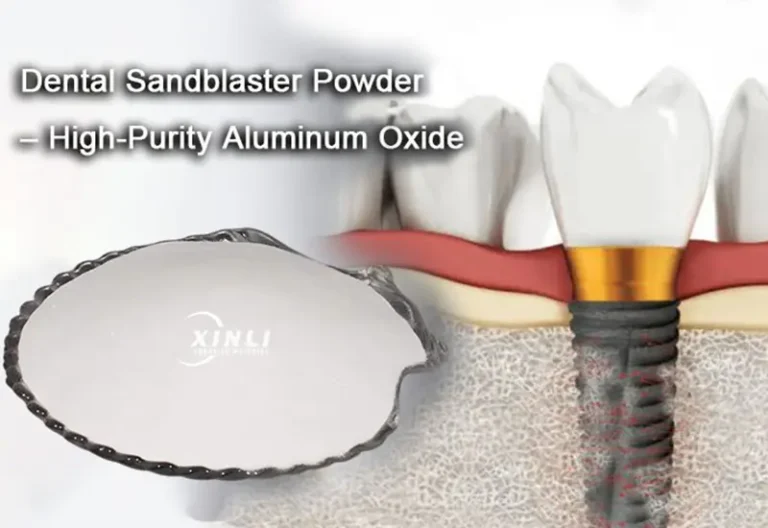
White fused alumina grain can be used in dental laboratories and small precision blasting systems for cleaning, roughening, and bonding preparation.
Common size selection:
| Dental Application | Recommended Size |
| Zirconia surface treatment | 50 micron or 90 micron |
| Metal dental framework blasting | 90-110 micron |
| Ceramic or porcelain repair | 50 micron |
| Small orthodontic parts | 50-90 micron |
For zirconia and ceramics, the blasting media should not be too coarse. For metal frameworks, slightly stronger roughening may be needed.
Practical tip:
For dental use, buyers should always confirm the blasting pressure and material manufacturer’s instructions. Particle size, pressure, distance, and blasting time all affect bonding performance.
4. Grinding Wheels and Abrasive Tools
White fused alumina grain is used in vitrified grinding wheels, resin grinding wheels, sharpening stones, mounted points, and abrasive tools.
Common size selection:
| Application | Recommended Size |
| Coarse grinding wheels | F24-F46 |
| General grinding tools | F46-F80 |
| Fine grinding wheels | F100-F150 |
| Precision abrasive tools | F180-F220 |
For grinding wheel production, buyers usually need to confirm not only particle size but also bulk density, magnetic material, sodium content, and grain shape.
Practical tip:
For heat-sensitive steel or precision grinding, white fused alumina grain is often preferred because it fractures and exposes fresh cutting edges during use.
5. Anti-Slip Coatings and Wear-Resistant Surfaces
White fused alumina grain can be broadcast onto coatings or mixed into surface systems to improve anti-slip and wear resistance.
Common size selection:
| Surface Type | Recommended Size |
| Strong anti-slip surface | #120-#150 |
| Medium anti-slip surface | #150-#180 |
| Fine decorative anti-slip surface | #180-#220 |
This application is similar to flooring, but the surface texture requirement may be different depending on whether the surface is industrial, commercial, or decorative.
Practical tip:
For walking areas, do not choose a grain that is too coarse unless strong slip resistance is required. For forklift or vehicle traffic, coarser grain may improve durability.
What Happens If the Grain Size Is Wrong?
Grain Too Coarse
Possible problems:
- Surface feels too rough
- Coating becomes difficult to level
- Decorative appearance is affected
- Fine parts may be damaged during blasting
- More resin or binder may be required
Grain Too Fine
Possible problems:
- Anti-slip effect is not enough
- Wear resistance may be weaker
- Blasting speed becomes slower
- Surface profile may be too shallow
- Grinding performance may not meet expectations
This is why buyers should describe the application clearly before ordering.
White Fused Alumina Grain vs Powder
White fused alumina grain and white fused alumina powder are used differently.
White fused alumina grain is mainly used for:
- Flooring aggregate
- Sandblasting
- Grinding wheels
- Anti-slip coatings
- Refractory aggregate
- Surface preparation
White fused alumina powder is mainly used for:
- AG glass treatment
- Glass polishing
- Ceramic lapping
- Metal polishing
- Lapping compound
- Polishing slurry
FAQ
What size of white fused alumina grain is used for epoxy flooring?
For epoxy corundum flooring, common sizes include #150, #180, and #220. #220 is often used when a finer surface and good wear resistance are required.
What size is best for anti-slip flooring?
For stronger anti-slip performance, #120-#150 can be used. For a finer decorative anti-slip surface, #180-#220 is more suitable.
What size is used for sandblasting?
For general blasting, F60-F80 is common. For fine surface preparation, F100-F220 may be selected.