White Fused Alumina Grain for Dental Sandblasting Size Selection and Practical Use Guide
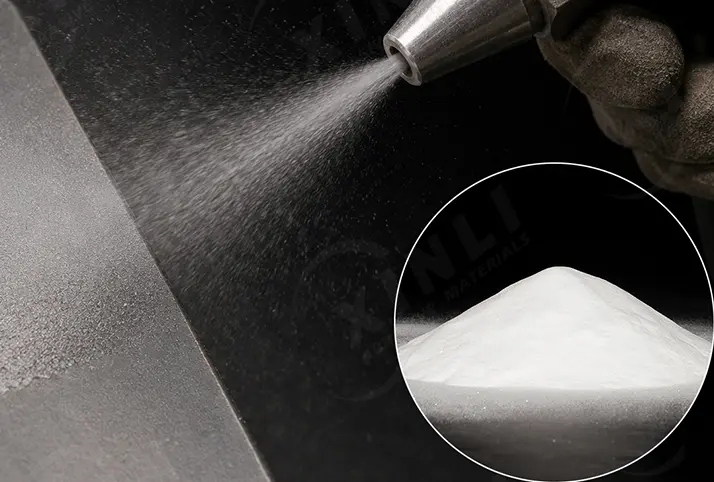
White fused alumina grain is widely used in dental laboratories for sandblasting, surface roughening, cleaning, and improving bonding preparation before further dental processing. In this application, the buyer is usually not looking for a general abrasive introduction. They want to know one thing clearly: which size should be used for which dental material, and how should it be applied safely and consistently?
For dental labs, white fused alumina is often used as aluminum oxide blasting media. Its high purity, sharp grain shape, clean white color, and low iron contamination make it suitable for precision surface treatment on metal frameworks, zirconia, ceramic restorations, crowns, bridges, and orthodontic components.
This guide explains how to choose white fused alumina grain for dental sandblasting and what information buyers should confirm before ordering.
Why White Fused Alumina Grain Is Used in Dental Sandblasting
Dental sandblasting requires a clean and controlled abrasive. The purpose is not heavy material removal. Instead, the goal is to create a uniform surface texture, remove residues, and prepare the surface for bonding, coating, repair, or further processing.
White fused alumina grain is suitable because it offers:
- High hardness for effective surface roughening
- Low iron contamination for cleaner dental surfaces
- Sharp angular particles for controlled blasting
- Stable particle size for repeatable results
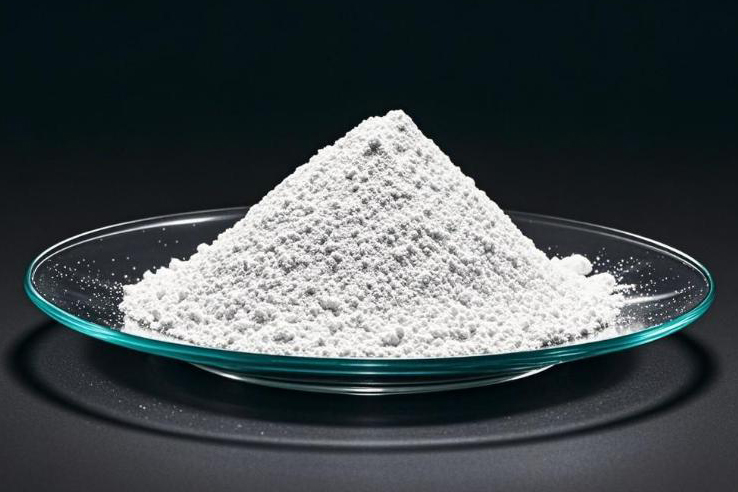
- Clean white color and high purity
- Good performance on metals, zirconia, and ceramics
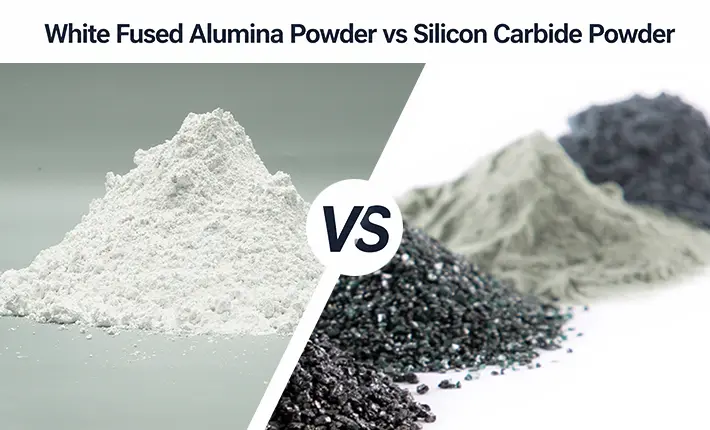
Compared with brown fused alumina, white fused alumina is cleaner and more suitable for dental lab work where contamination control matters.
Common Dental Sandblasting Applications
1. Metal Framework Surface Preparation
Dental laboratories often sandblast cobalt-chromium, nickel-chromium, titanium, or other metal frameworks before ceramic layering, coating, or bonding.
For this use, the abrasive needs to create enough roughness for mechanical retention without damaging the framework.
Recommended size range:
| Application | Suggested Size |
| General metal framework blasting | 90-110 micron |
| Stronger roughening before bonding | 110-125 micron |
| Heavy oxide layer removal | 125-150 micron |
For most dental metal frameworks, 110 micron white fused alumina grain is a common starting choice.
2. Zirconia Surface Treatment
Zirconia requires more careful blasting. The goal is to improve bonding surface energy and create light roughness, but excessive pressure or coarse particles may damage the surface.
Recommended size range:
| Application | Suggested Size |
| Light zirconia surface cleaning | 50 micron |
| Bonding preparation | 50-90 micron |
| More aggressive surface roughening | 90 micron |
For zirconia, many labs prefer 50 micron or 90 micron aluminum oxide blasting media, depending on the equipment and bonding protocol.
Important note: Always follow the dental material manufacturer’s instructions for zirconia blasting pressure and surface treatment.
3. Ceramic and Porcelain Repair
For porcelain or ceramic repair, blasting should be controlled and not overly aggressive. A fine white fused alumina grain can help clean the surface and improve bonding preparation.
Recommended size range:
| Application | Suggested Size |
| Ceramic surface cleaning | 50 micron |
| Porcelain repair preparation | 50 micron |
| Light surface roughening | 50-90 micron |
For delicate ceramic surfaces, avoid very coarse blasting media unless the process specifically requires it.
4. Orthodontic and Small Metal Parts
White fused alumina grain can also be used for orthodontic brackets, small metal parts, and precision dental components. In these cases, consistency is important because the workpiece is small and surface damage must be avoided.
Recommended size range:
| Application | Suggested Size |
| Small metal part cleaning | 50-90 micron |
| Orthodontic component preparation | 50-110 micron |
| Fine surface texture control | 50 micron |
5. Why Dental Laboratories Distributors Choose Xinli Abrasives
When manufacturing high-end dental restorations, your reputation depends on the predictability of your materials. As a specialized manufacturer of synthetic minerals with decades of industrial experience, Zhengzhou Xinli Wear-Resistant Materials Co., Ltd. (Xinli Abrasives) delivers white fused alumina grain specifically refined for the micro-blasting and dental laboratory sectors.
How to Choose the Right Particle Size
The right particle size depends on the dental material, required roughness, blasting pressure, and equipment.
A simple selection guide:
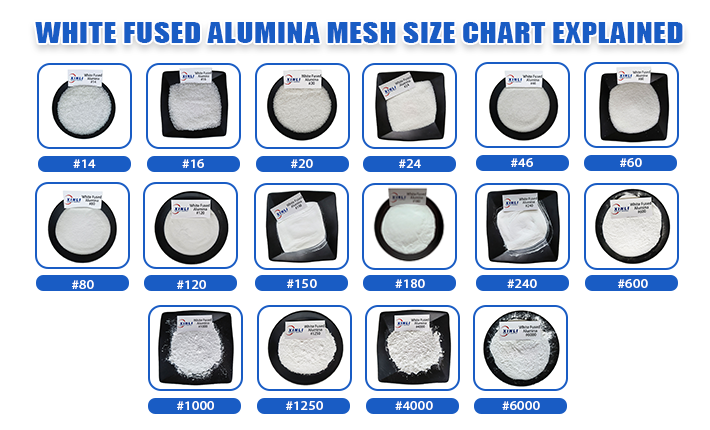
| Particle Size | Best For | Surface Effect |
| 50 micron | Zirconia, ceramic, porcelain repair, small parts | Fine and controlled surface |
| 90 micron | Zirconia, metal frameworks, general dental blasting | Moderate roughness |
| 110 micron | Metal frameworks, bonding preparation | Stronger surface profile |
| 125-150 micron | Heavy cleaning or stronger roughening | More aggressive texture |
If the buyer is not sure, a good starting recommendation is:
- 50 micron for zirconia and ceramic surfaces
- 90-110 micron for metal frameworks
- 125 micron or above only when stronger roughening is required
Blasting Pressure and Operation Tips
Particle size is only one part of the result. Blasting pressure, distance, angle, and time also affect the final surface.
General practical tips:
- Use lower pressure for zirconia and ceramic surfaces
- Use moderate pressure for metal frameworks
- Keep a consistent blasting distance
- Avoid staying too long on one area
- Use clean and dry compressed air
- Replace contaminated or broken-down media regularly
- Test on sample pieces before production use
For dental applications, the goal is controlled surface preparation, not excessive cutting.
What Problems Can the Right Grain Size Solve?
Customers often care about these problems:
Poor bonding strength
If the particle size is too fine or blasting is too weak, the surface may not provide enough mechanical retention. A slightly larger size, such as 90 or 110 micron, may help for metal frameworks.
Surface damage on zirconia
If the abrasive is too coarse or the pressure is too high, zirconia may be damaged. A finer size, such as 50 micron, is usually safer for controlled surface treatment.
Uneven surface finish
This may happen when particle size distribution is unstable. Buyers should choose a supplier that can provide consistent screened grain and stable batch quality.
Too much dust
Fine particles and broken-down media can increase dust. Proper extraction and regular media replacement are important.
FAQ
Q1: What is the primary difference between white fused alumina grain and brown fused alumina?
Q2: Why does our porcelain keep chipping or peeling off zirconia/metal frameworks after dental sandblasting?
Q3: Why does our fine-grit white fused alumina micro-powder frequently clog the blasting pens or sputter?
Q4: How many times can white fused alumina grain be recycled in a dry-blasting cabinet?