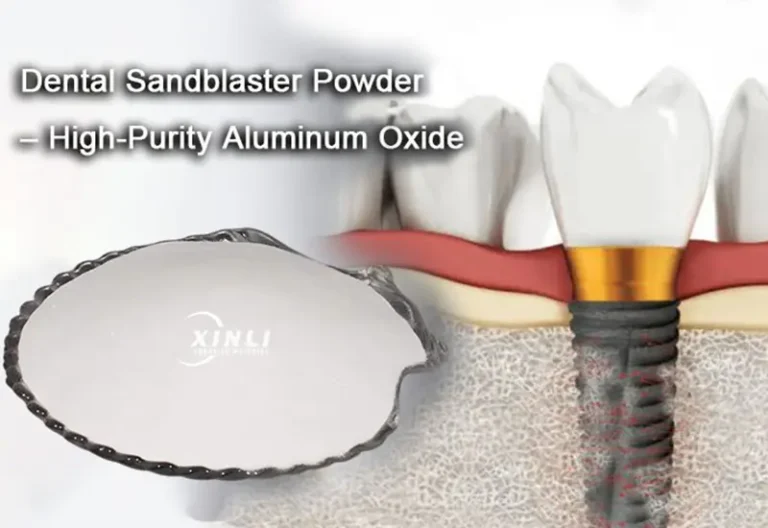
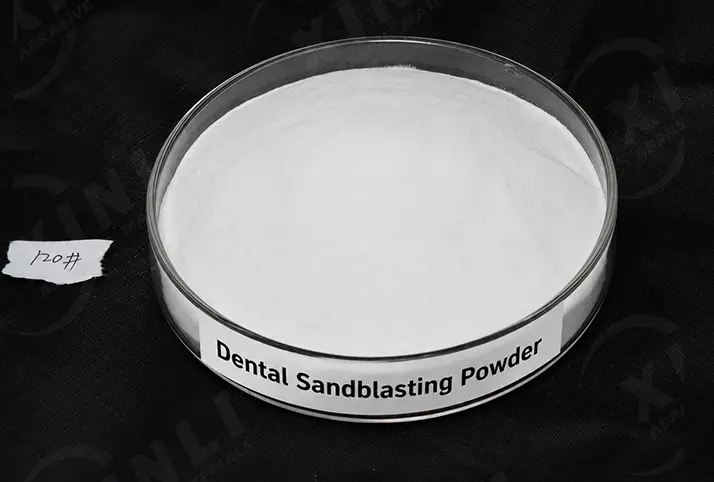
white aluminum oxide is widely used in dental sandblasting for surface cleaning, roughening, bonding preparation, and restoration repair. In dental laboratories, it is often used as aluminum oxide blasting media for zirconia crowns, ceramic restorations, metal frameworks, implant components, orthodontic parts, and porcelain repair.
For dental buyers, the key question is usually not “What is white fused alumina?” Instead, they want to know: which micron size should be used for zirconia, metal, ceramic, or porcelain surfaces?
Choosing the wrong particle size may cause weak bonding, surface damage, over-roughening, excessive dust, or inconsistent restoration quality. This guide explains how to choose white aluminum oxide for dental sandblasting based on real application needs.
Why White Fused Alumina Is Used in Dental Sandblasting
Dental sandblasting is used to prepare a surface before bonding, coating, ceramic layering, cementation, or repair. The goal is not heavy material removal. The goal is controlled surface treatment.
white aluminum oxide is suitable for dental sandblasting because it has:
- High Al2O3 purity
- Clean white color
- Low iron contamination
- Sharp angular particle shape
- Stable particle size distribution
- Strong but controllable cutting effect
- Good performance on zirconia, ceramic, and metal surfaces
Compared with brown fused alumina, white fused alumina is cleaner and more suitable for dental applications where contamination control is important.
Common Dental Applications and Recommended Sizes
1. Zirconia Crown and Bridge Surface Treatment
Zirconia is hard, dense, and sensitive to excessive surface damage. Sandblasting is often used to improve surface roughness and bonding preparation, but it must be controlled carefully.
Recommended starting sizes:
| Application | Suggested Size | Surface Effect |
| Light zirconia cleaning | 50 micron | Fine surface cleaning |
| Zirconia bonding preparation | 50 micron | Controlled roughening |
| Stronger zirconia surface treatment | 90 micron | More visible texture |
For zirconia, 50 micron white aluminum oxide is usually a safer starting point. It provides controlled surface treatment without being too aggressive.
Practical tip:
Use lower pressure and shorter blasting time for zirconia. Always follow the dental material manufacturer’s bonding protocol.
2. Metal Framework Sandblasting
Dental metal frameworks often need stronger surface roughening before ceramic layering, bonding, or coating. These may include cobalt-chromium, nickel-chromium, titanium, or other dental alloys.
Recommended sizes:
| Application | Suggested Size | Surface Effect |
| General metal framework blasting | 90 micron | Moderate roughness |
| Stronger bonding preparation | 110 micron | Stronger surface profile |
| Oxide layer removal | 110-125 micron | More aggressive cleaning |
For metal frameworks, 90-110 micron is commonly used because it creates enough roughness for mechanical retention.
Practical tip:
If bonding strength is weak, the media may be too fine, pressure too low, or blasting time too short. A 110 micron grade can be tested for stronger surface preparation.
3. Ceramic and Porcelain Repair
Ceramic and porcelain surfaces require more careful blasting. The purpose is usually surface cleaning, light roughening, or repair preparation.
Recommended sizes:
| Application | Suggested Size | Surface Effect |
| Porcelain repair | 50 micron | Fine surface texture |
| Ceramic surface cleaning | 50 micron | Low damage risk |
| Slightly stronger roughening | 90 micron | More texture |
For ceramic and porcelain repair, 50 micron is usually preferred. Coarser powder may increase the risk of surface damage or visible defects.
4. Orthodontic and Small Dental Parts
Small dental components need controlled blasting because the surface area is limited and excessive cutting may affect fit or appearance.
Recommended sizes:
| Application | Suggested Size |
| Small metal part cleaning | 50-90 micron |
| Orthodontic bracket treatment | 50 micron |
| Fine precision component blasting | 50 micron |
For small parts, particle size stability is very important. If the powder contains oversized particles, the surface may become uneven.
Quick Size Selection Guide
| Micron Size | Best Used For | Notes |
| 25-30 micron | Very delicate cleaning | Less roughening, slower cutting |
| 50 micron | Zirconia, ceramic, porcelain repair | Most practical fine dental grade |
| 90 micron | General dental blasting, zirconia or metal | Balanced cleaning and roughness |
| 110 micron | Metal frameworks, stronger bonding prep | More aggressive surface profile |
| 125 micron | Heavy oxide removal or strong roughening | Use carefully on delicate parts |
For most dental labs, the practical starting sizes are:
- 50 micron for zirconia, ceramic, porcelain repair
- 90 micron for general dental sandblasting
- 110 micron for metal frameworks and stronger surface roughening
Common Problems and How to Solve Them
Problem 1: Bonding Strength Is Not Good
Possible causes:
- Particle size is too fine
- Blasting pressure is too low
- Surface was not cleaned before blasting
- Blasting time is too short
- Wrong bonding protocol
Suggested solution:
For zirconia, test 50 micron with correct pressure and bonding system. For metal frameworks, test 90 or 110 micron for stronger surface profile.
Problem 2: Zirconia Surface Looks Damaged
Possible causes:
- Particle size is too coarse
- Pressure is too high
- Blasting time is too long
- Nozzle distance is too close
Suggested solution:
Use 50 micron white aluminum oxide and reduce pressure, time, or blasting intensity.
Problem 3: Surface Roughness Is Uneven
Possible causes:
- Particle size distribution is unstable
- Powder is damp or clogged
- Blasting angle changes during operation
- Air pressure is not stable
Suggested solution:
Use dry, well-classified white aluminum oxide and keep blasting distance, pressure, and angle consistent.
Problem 4: Too Much Dust in the Blasting Cabinet
Possible causes:
- Powder breaks down after repeated use
- Dust extraction is weak
- Media is reused too long
- Powder contains too many fine particles
Suggested solution:
Replace media regularly, improve dust extraction, and choose a stable micron size grade.
What Quality Should Dental Buyers Care About?
For dental sandblasting, buyers should not only ask for price. The following quality points matter:
- Particle size accuracy
- Narrow particle size distribution
- Low iron contamination
- Clean white color
- Dry powder with low moisture
- Stable batch quality
- Suitable packaging for clean storage
- COA, TDS, and SDS availability
For dental applications, powder cleanliness and consistency are especially important because surface treatment results must be repeatable.
FAQ
Is white aluminum oxide used in dental sandblasting?
Yes. It is commonly used as aluminum oxide blasting media for dental labs, especially for zirconia, ceramic, porcelain, and metal framework surface treatment.
What size is best for zirconia sandblasting?
50 micron is often a practical starting size for zirconia because it provides controlled surface roughening with lower damage risk.
What size is used for dental metal frameworks?
90 micron and 110 micron are commonly used for dental metal frameworks because they create a stronger surface profile.
Can one size be used for all dental materials?
Not recommended. Zirconia and ceramic usually need finer media, while metal frameworks can use slightly coarser media.