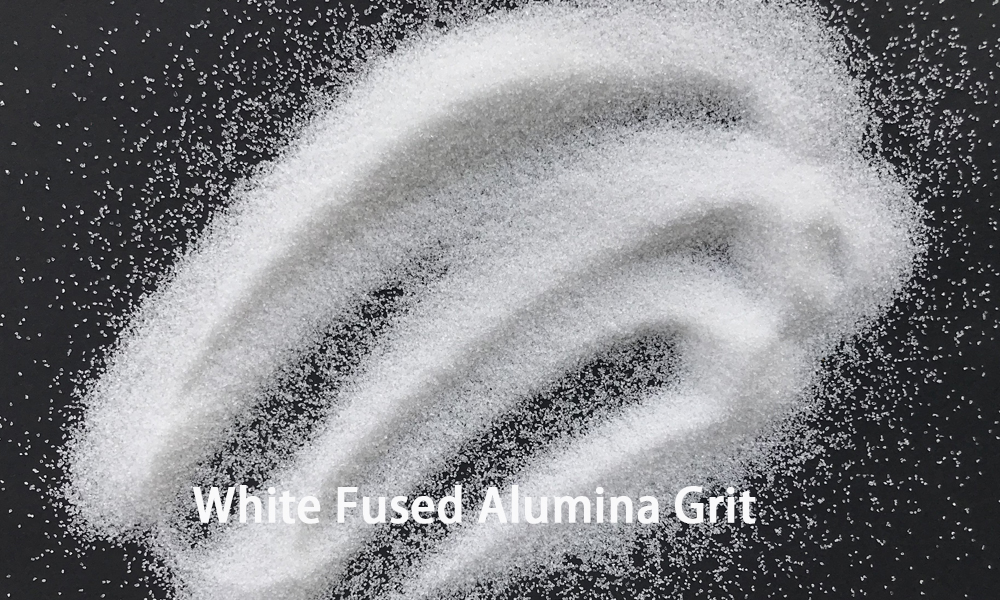
White fused alumina grit is a high-purity synthetic abrasive used in blasting, grinding wheels, coated abrasives, refractory materials, ceramic products, and surface preparation. It is also called white aluminum oxide grit, white aluminium oxide grit, white corundum grit, or WFA grit.
For industrial buyers, the main value of white fused alumina grit is its clean cutting performance, high hardness, low iron contamination, and stable particle size. Compared with brown fused alumina, white fused alumina grit has higher purity and a cleaner white color, making it suitable for applications where surface cleanliness and controlled finishing are important.
What Is White Fused Alumina Grit?
White fused alumina grit is made by melting high-purity alumina powder in an electric arc furnace. After cooling, the fused block is crushed, shaped, magnetically separated, screened, and classified into different grit sizes.
Its main chemical component is Al2O3, usually around 99% or higher. Because of its hardness and sharp grain shape, white fused alumina grit can cut, clean, grind, and prepare surfaces efficiently.
Common names include:
- White fused alumina grit
- WFA grit
- White aluminum oxide grit
- White aluminium oxide grit
- White corundum grit
- White alumina abrasive grain
Main Properties of White Fused Alumina Grit
White fused alumina grit is selected for many industrial processes because of its stable physical and chemical properties.
Key features include:
- High Al2O3 purity
- Mohs hardness around 9
- Clean white color
- Sharp and angular grain shape
- Low iron content
- Good thermal stability
- Strong chemical resistance
- Stable particle size distribution
Low sodium white fused alumina grit is also available for applications such as vitrified grinding wheels, advanced ceramics, and refractory materials where Na2O content must be controlled.
Common Grit Sizes
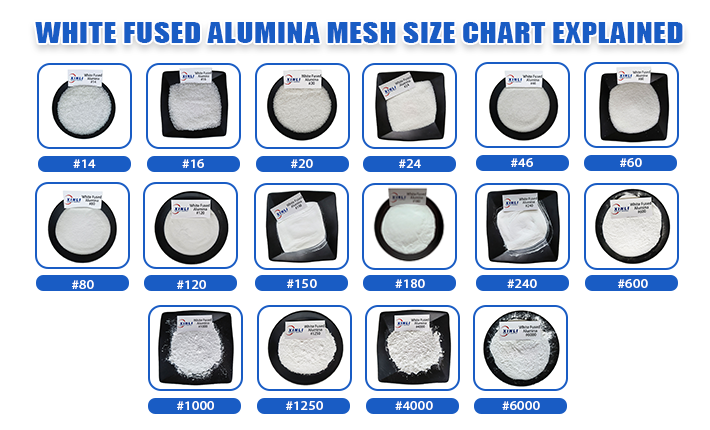
White fused alumina grit is usually supplied according to FEPA, JIS, or customer-specific standards. The correct grit size depends on the application and required surface result.
Common FEPA F grit sizes include:
- F4 to F24: coarse grit for refractory materials and heavy-duty grinding
- F30 to F60: blasting, surface preparation, and grinding wheels
- F80 to F120: finer blasting and precision abrasive tools
- F150 to F220: fine grinding and surface finishing
For coated abrasives, P grit may be required. For special blasting or refractory applications, custom screened sizes can also be supplied.
Typical Applications
Sandblasting
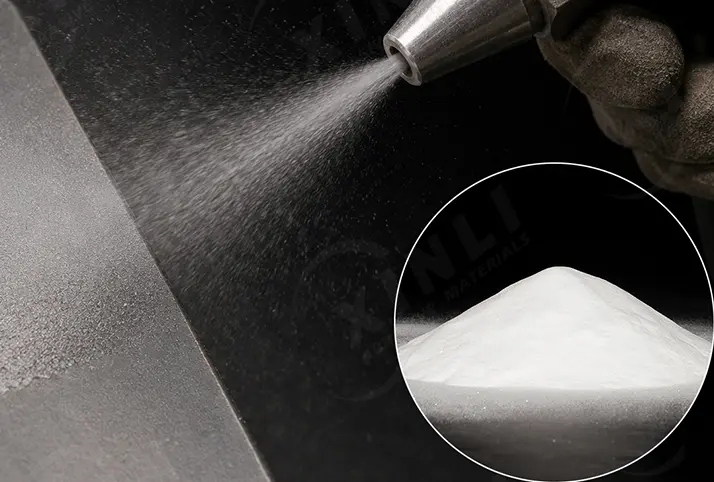
White fused alumina grit is widely used as a clean blasting media. It is suitable for stainless steel, aluminum alloy, titanium alloy, glass, molds, and precision metal parts.
Because it has low iron contamination, it is often selected for surfaces where rust contamination or color pollution must be avoided. It can create a clean, sharp surface profile before coating, bonding, or further processing.
Grinding Wheels
White fused alumina grit is commonly used in vitrified grinding wheels, resin bonded wheels, mounted points, sharpening stones, and other abrasive tools.
It is suitable for grinding hardened steel, tool steel, high-speed steel, and heat-sensitive materials. Its sharp grains provide good cutting action, while its friability helps expose new cutting edges during use.
Coated Abrasives
White fused alumina grit can also be used in coated abrasive products such as sandpaper, abrasive belts, flap discs, and sanding rolls. For this application, particle size consistency and grain shape are important for stable cutting performance.
Refractory Materials
Coarse white fused alumina grit is used in refractory castables, ceramic linings, kiln furniture, and high-temperature materials. Its high purity and thermal stability make it useful in demanding refractory applications.
Ceramics and Anti-Slip Surfaces
White fused alumina grit can be used in ceramic products, wear-resistant surfaces, anti-slip flooring, and specialty surface treatments where hardness and durability are required.
How to Choose the Right White Fused Alumina Grit
Before purchasing white fused alumina grit, buyers should confirm the final application first. Different industries require different grit sizes and quality levels.
For blasting, confirm:
- Workpiece material
- Required surface roughness
- Grit size
- Reuse requirement
- Dust control requirement
- Contamination limit
For grinding wheels, confirm:
- Bond type
- Wheel hardness
- Workpiece material
- Cutting speed requirement
- Sodium content limit
For refractory use, confirm:
- Chemical composition
- Grain size distribution
- Bulk density
- High-temperature requirement
- Mixing formula
For coated abrasives, confirm:
- P grit or F grit standard
- Grain shape requirement
- Coating process
- Final abrasive product type
White Fused Alumina Grit vs Brown Fused Alumina Grit
White fused alumina grit and brown fused alumina grit are both widely used abrasive grains, but they are not the same.
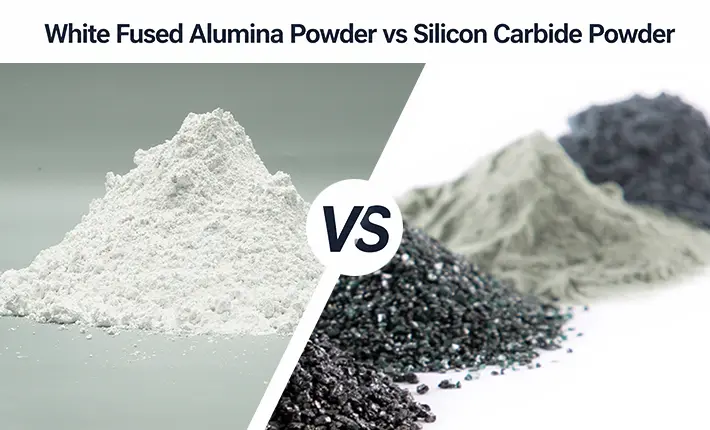
White fused alumina grit has higher purity, lower iron content, and cleaner color. It is better for stainless steel blasting, precision grinding, high-grade abrasive tools, and applications requiring low contamination.
Brown fused alumina grit has higher toughness and lower cost. It is often used for heavy-duty grinding, general blasting, and applications where purity is less critical.
FAQ
1. What is white fused alumina grit used for?
White fused alumina grit is used for sandblasting, grinding wheels, coated abrasives, refractory materials, ceramics, and surface preparation.
2. Is white fused alumina grit the same as white aluminum oxide grit?
Yes. White fused alumina grit, white aluminum oxide grit, white aluminium oxide grit, and white corundum grit usually refer to the same material.
3. What grit sizes are available?
Common sizes include FEPA F4 to F220. Custom sizes can also be supplied for blasting, refractory, or abrasive tool applications.
4. Can white fused alumina grit be used for stainless steel blasting?
Yes. It is suitable for stainless steel blasting because it has low iron contamination and produces a clean surface profile.
5. What is the difference between grit and powder?
Grit is coarser and used for blasting, grinding, and abrasive tools. Powder is finer and used for polishing, lapping, and precision finishing.