Why Ceramic Grinding Needs a Stable Abrasive
Ceramic parts are hard, brittle and sensitive to surface defects. During grinding, the abrasive must remove material efficiently while controlling chipping, edge breakage, scratches and heat damage. This is why buyers who work with alumina ceramics, porcelain parts, technical ceramic components and ceramic surface finishing often pay close attention to abrasive purity, grit size distribution and batch consistency.
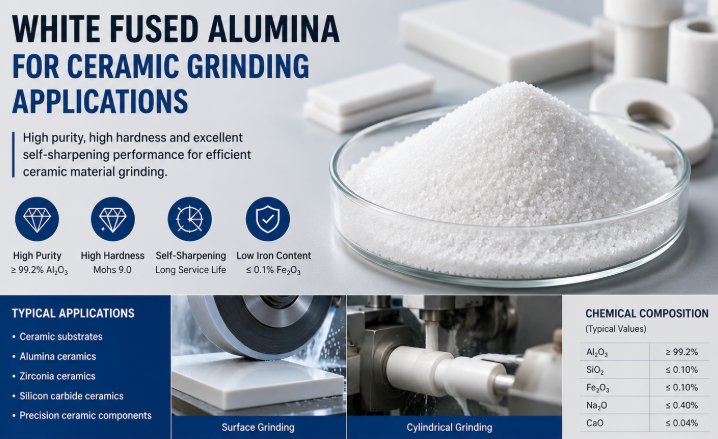
White fused alumina is widely selected for ceramic grinding applications where a clean, hard and chemically stable abrasive is required. It is not the only abrasive used for ceramics. For very hard fully sintered zirconia, silicon carbide ceramics or tight-tolerance machining, diamond tools may be required. However, for many ceramic grinding, surface conditioning, deburring and abrasive tool applications, white fused alumina gives a practical balance of hardness, cutting action, surface quality and cost control.
What Is White Fused Alumina?
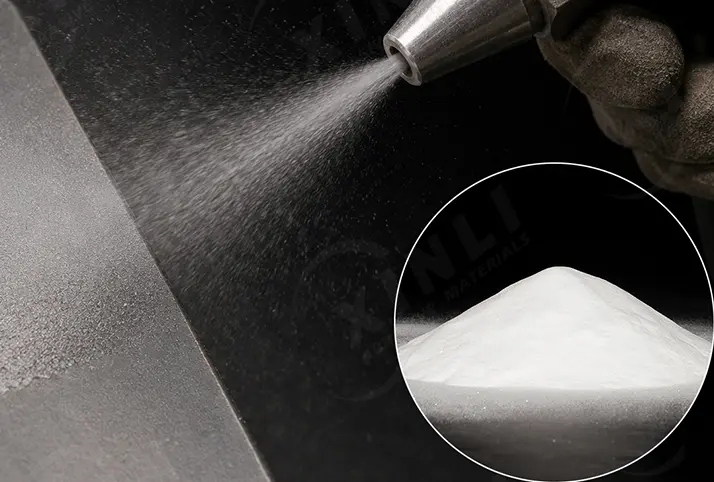
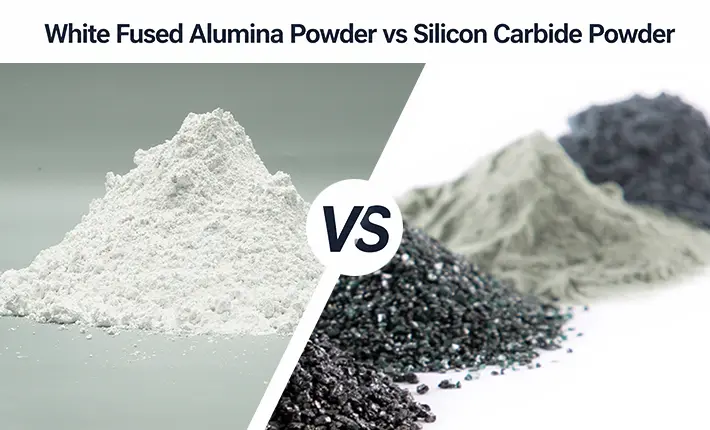
White fused alumina, also called WFA, white aluminum oxide or white corundum, is produced by melting high-purity industrial alumina in an electric arc furnace. After cooling, the fused material is crushed, magnetically separated, screened and graded into different particle sizes. The result is a hard, angular alumina abrasive with high Al2O3 content, low iron contamination risk and a clean white appearance.
For ceramic grinding applications, the most important point is not only chemical purity. Buyers should also check particle shape, grading standard, bulk density, magnetic content, dust level and whether the supplier can keep the same specification stable from batch to batch.
Why WFA Is Used in Ceramic Grinding
- High hardness: white fused alumina is close to Mohs 9, which allows it to cut many ceramic surfaces.
- Angular grain shape: sharp edges help create a controlled grinding action instead of rubbing the workpiece.
- Low iron contamination: useful for light-colored ceramics and parts where dark contamination is unacceptable.
- Thermal and chemical stability: suitable for dry or wet grinding environments depending on the tool system.
- Stable grading: controlled particle size helps reduce random deep scratches and inconsistent surface finish.
Recommended Particle Sizes for Ceramic Grinding
The right grit size depends on the ceramic material, removal rate, grinding pressure, tool type and target surface finish. Coarser grit removes material faster but leaves a deeper scratch pattern. Finer grit improves surface finish but lowers cutting speed and may require more process time.
| Application stage | Common WFA size | Buyer notes |
| Rough grinding and shape correction | F36-F60 | Used when removal rate is more important than final surface finish. Test pressure and bond strength to avoid edge chipping. |
| General ceramic surface grinding | F80-F120 | A common starting range for balanced cutting speed and surface control on ceramic plates, tiles and technical ceramic parts. |
| Fine grinding before polishing | F150-F220 | Useful when the next process is polishing, lapping or coating. Helps reduce visible grinding marks. |
| Coated abrasive belts or sheets | P80-P220 | Used when WFA is selected for coated abrasives. Choose P grit according to backing, resin system and target finish. |
| Lapping after grinding | 240 mesh, 325 mesh or FEPA micron grades | Not a direct replacement for grinding grit. Use only when the process moves from grinding to fine finishing or lapping. |
How to Match WFA with the Ceramic Workpiece
Alumina Ceramic Parts
For alumina ceramic parts, buyers often start with F80-F120 for general surface grinding, then move to F150-F220 or a fine powder process when a smoother finish is needed. If the part has thin edges or small holes, a finer grade and lower grinding pressure can reduce chipping.
Ceramic Tiles and Porcelain Surfaces
For tile edge grinding, surface matte finishing or decorative ceramic treatment, F60-F120 is often tested first. The exact grade should be chosen according to the required roughness, visible scratch tolerance and whether the surface will be glazed, coated or polished afterward.
Technical Ceramic Components
For technical ceramics, the buyer should first confirm whether the part is green, pre-sintered or fully sintered. White fused alumina is more practical for surface conditioning, rough grinding and abrasive tool production. For extremely hard finished parts with tight tolerance, diamond abrasives may still be necessary.
Grit, Powder and Micron Powder: Do Not Mix Them Up
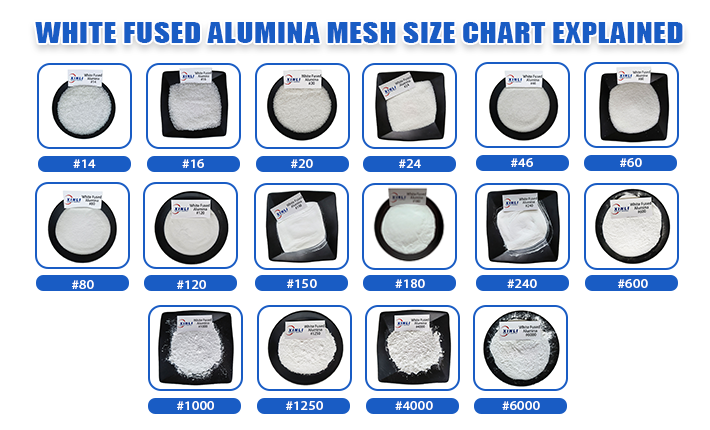
In ceramic grinding, WFA grit normally means FEPA F or FEPA P sizes used in bonded abrasives, coated abrasives or loose abrasive grinding. WFA powder or micron powder is used when the process is closer to lapping, polishing, ceramic formulation or precision surface finishing. If the buyer only writes ‘white fused alumina powder‘ but actually needs F grit for a grinding wheel, quotation and sample selection may be wrong.
Quality Points Ceramic Buyers Should Check
- Al2O3 purity and impurity level, especially Fe2O3 and Na2O when color and ceramic performance matter.
- Particle size distribution and whether the material follows FEPA F, FEPA P, JIS or custom grading.
- Magnetic material content, because metal contamination can affect ceramic surface quality.
- Bulk density and grain shape, especially when producing bonded or coated abrasive tools.
- Sample consistency compared with mass production, not only the first trial sample.
Why Buy from a Factory Supplier
Ceramic grinding trials often require several grit sizes before the final specification is fixed. A factory supplier can provide stable batch control, multiple size options, sample support and clearer communication on production tolerance. For B2B buyers, this reduces the risk of receiving a material that looks acceptable in the sample stage but changes during regular orders.
FAQ
Is white fused alumina suitable for all ceramic grinding?
No. It is useful for many ceramic grinding and surface conditioning jobs, but very hard fully sintered technical ceramics may require diamond tools.
Which WFA grit size should I test first for ceramic grinding?
For general ceramic surface grinding, F80-F120 is a practical starting range. For rough grinding, test F36-F60. For fine grinding, test F150-F220.
What is the difference between WFA grit and WFA powder?
Grit is usually used for grinding wheels, coated abrasives and blasting. Powder or micron powder is used for lapping, polishing and fine surface finishing.