1. Why Use White Fused Alumina Before Coating?
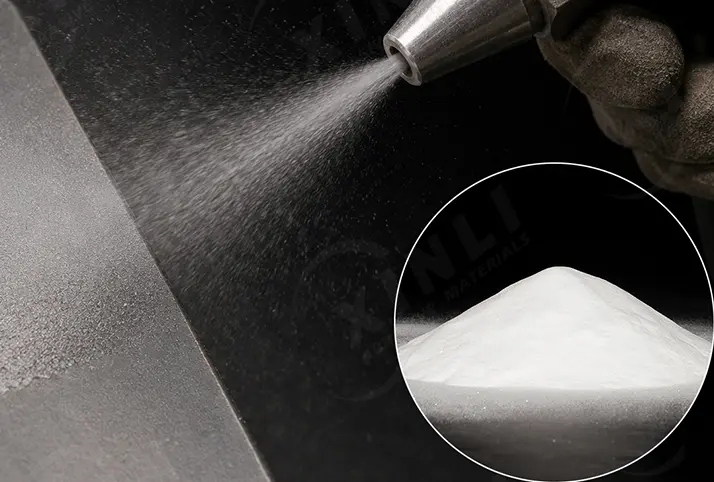
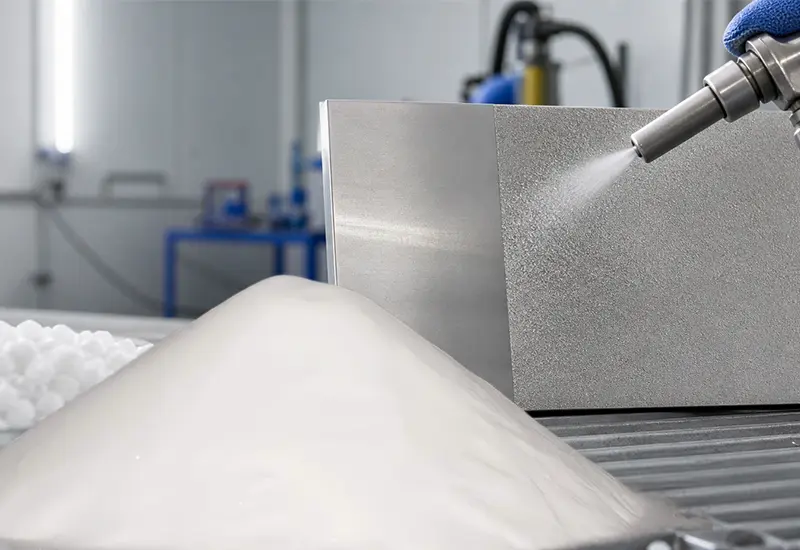
White fused alumina for surface preparation before coating refers to using WFA abrasive media to clean, roughen and prepare a workpiece surface before painting, powder coating, adhesive bonding, protective coating or functional coating.
Coating performance does not depend only on the coating material. Surface cleanliness, surface profile, oil contamination, oxide layers, old coating, dust and metallic contamination can all affect coating adhesion and long-term service life. Many coating failures happen because the surface preparation was not suitable for the coating system.
White fused alumina, also called white aluminum oxide or white corundum, is a high-purity synthetic alumina abrasive. It has high hardness, sharp angular grains, clean white color and low iron content. These properties make it suitable for stainless steel, aluminum alloy, glass, ceramics, precision metal parts and applications where low contamination surface preparation is required.
2. What Does White Fused Alumina Do in Surface Preparation?
Removes weak surface layers
White fused alumina blasting media can help remove light oxide layers, old coatings, surface dirt, processing residue and weak surface layers before coating.
Creates a controlled surface profile
Most coating systems require a suitable surface profile for mechanical bonding. Angular white fused alumina grains can create a controlled rough surface that helps the coating adhere to the substrate.
Reduces iron contamination risk
For stainless steel, aluminum alloy, glass and ceramics, iron contamination may affect appearance, corrosion resistance or coating performance. Low iron and low magnetic material WFA is often selected for cleaner surface preparation.
Improves coating consistency
Stable white fused alumina grit helps create a more uniform surface profile. This can improve the consistency of coating thickness, adhesion and surface appearance.
3. Suitable Substrates
Stainless Steel
White fused alumina is often used before coating stainless steel because it reduces the risk of iron contamination. It is suitable for stainless steel equipment, pipes, welds, structures and protective coating preparation.
Aluminum Alloy
Aluminum is softer than steel, so grit size and blasting pressure should be controlled carefully. White fused alumina can be used before powder coating, painting, anodizing-related preparation or adhesive bonding.
Carbon Steel and Alloy Steel
For general carbon steel, brown fused alumina, steel grit or steel shot may also be used. However, if the buyer requires a cleaner surface or wants to avoid metallic contamination, white fused alumina can be selected.
Glass and Ceramics
Glass and ceramic surface preparation usually requires clean media and stable particle size. WFA can be used for surface roughening before coating, bonding preparation or functional coating treatment.
Precision Components
For precision metal parts, instrument components, medical-related parts or electronic components, white fused alumina can be used for light blasting and controlled roughening. Fine grit and lower blasting pressure are usually recommended.
4. How to Choose Grit Size Before Coating
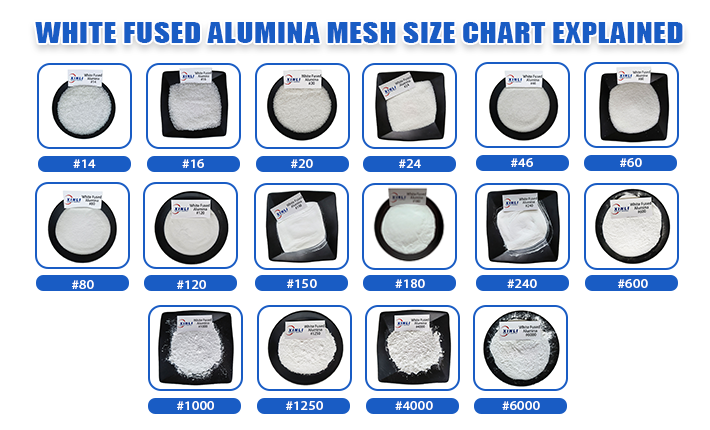
Grit size determines surface profile, cleaning speed and impact strength. Coarser grit creates a deeper surface profile and faster cutting. Finer grit creates a smoother and more uniform surface but works more slowly.
F36-F46:
Suitable for strong roughening, old coating removal, oxide layer removal and coating systems that require a deeper surface profile. This range is suitable for thicker metal parts, not for thin or precision workpieces.
F60-F80:
Suitable for general industrial coating preparation, stainless steel blasting, aluminum surface roughening and common metal surface preparation. This is a practical range for balancing efficiency and surface roughness.
F100-F120:
Suitable for finer surface preparation, thinner workpieces, precision parts, glass and ceramic coating preparation and applications requiring a more uniform surface.
F150-F180:
Suitable for light blasting, fine texture, adhesive bonding preparation and low roughness requirements.
F220:
Suitable for very light surface adjustment and low-impact treatment. It is often used for fine surfaces or special process testing.
If the buyer is not sure which size to choose, general metal coating preparation can start with F60 or F80. Stainless steel and aluminum alloy can test F80 or F100. Precision parts and thin workpieces can test F120 or F150.
5. Size Selection by Coating Application
Application: Old coating removal
Recommended size: F36-F60
Effect: Fast cleaning and deeper surface profile
Application: General metal coating preparation
Recommended size: F60-F80
Effect: Balanced roughness and efficiency
Application: Stainless steel coating preparation
Recommended size: F80-F120
Effect: Cleaner surface and lower contamination risk
Application: Aluminum powder coating preparation
Recommended size: F80-F120
Effect: Uniform surface with moderate impact
Application: Glass or ceramic coating preparation
Recommended size: F100-F150
Effect: Fine texture and clean surface
Application: Adhesive bonding preparation
Recommended size: F120-F180
Effect: Light roughening with reduced substrate damage
Application: Precision part light blasting
Recommended size: F150-F220
Effect: Lower impact and finer finish
These sizes are starting references. Final selection should follow the coating supplier’s requirement, target surface profile, coating thickness, blasting equipment, pressure, nozzle distance and substrate material.
6. Dry Blasting vs Wet Blasting
Dry Blasting
Dry blasting is efficient and commonly used for metal coating preparation, large workpieces and industrial batch processing. It creates more dust, so dust collection and worker protection are important.
Wet Blasting
Wet blasting mixes water and white fused alumina media before impact. It reduces dust and usually creates a softer, more uniform surface. It is suitable for aluminum alloy, glass, ceramics, precision parts and projects where dust control is important.
If the buyer needs high processing speed, dry blasting is usually selected. If the buyer needs a finer surface, lower dust and lower impact, wet blasting should be tested.
7. White Fused Alumina vs Other Surface Preparation Media
White Fused Alumina vs Brown Fused Alumina
Brown fused alumina is tough and economical, suitable for general steel and heavy-duty cleaning. White fused alumina has higher purity and lower iron contamination risk, making it better for stainless steel, aluminum alloy, glass and clean coating preparation.
White Fused Alumina vs Steel Grit or Steel Shot
Steel grit and steel shot are efficient for large steel structures. However, they may introduce metallic contamination and are not suitable for some stainless steel, aluminum or clean surface applications.
White Fused Alumina vs Glass Beads
Glass beads are round and gentler. They are used for peening, cleaning and smoother satin finishes. White fused alumina is angular and more aggressive, making it better for creating a surface profile for mechanical coating adhesion.
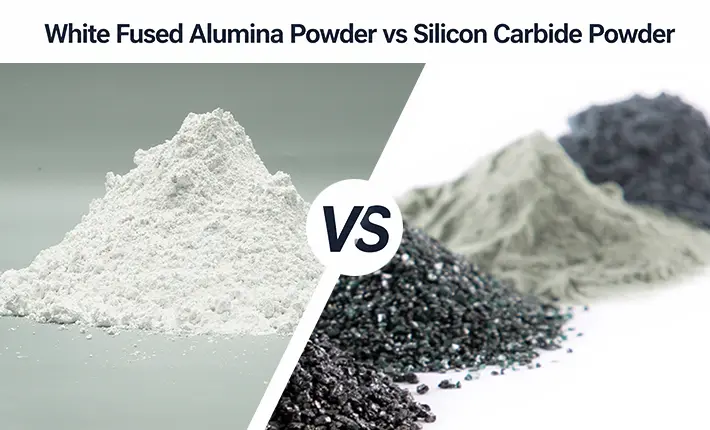
White Fused Alumina vs Silicon Carbide
Silicon carbide is harder and cuts more aggressively. It is suitable for stone and very hard materials. White fused alumina is more suitable for clean surface preparation and controlled roughening before coating.
8. Common Surface Preparation Problems
Poor Coating Adhesion
Possible causes include insufficient surface roughness, oil contamination, dust remaining after blasting, grit size that is too fine or too much delay before coating. Confirm the target surface profile and clean the surface properly after blasting.
Surface Is Too Rough
The grit may be too coarse or blasting pressure may be too high. Try a finer size, such as changing from F46 to F80, or reduce pressure.
Uneven Surface Profile
Possible causes include unstable grit distribution, inconsistent nozzle movement, changing nozzle distance or pressure fluctuation. Use stable WFA grading and control blasting parameters.
Substrate Deformation or Damage
Thin parts, aluminum parts and precision components are sensitive to impact. Choose finer grit such as F100-F180, reduce pressure and increase nozzle distance.
Dust Affects Coating
Residual dust after blasting may reduce coating adhesion. Choose low-dust white fused alumina and clean the surface correctly after blasting.
9. What Buyers Should Check Before Purchase
When buying white fused alumina for coating preparation, buyers should confirm:
1. Grit size: F36, F46, F60, F80, F100, F120, F150, F180, F220 or other size
2. Al2O3 content
3. Fe2O3 content
4. Na2O content
5. Magnetic material
6. Dust content
7. Particle size distribution
8. Particle shape
9. Bulk density
10. Packaging and moisture protection
For surface preparation before coating, particle size distribution and dust content are especially important. Unstable grading can cause inconsistent roughness, and excessive dust can affect coating adhesion and the working environment.
10. RFQ Information Buyers Should Provide
To receive an accurate recommendation and quotation, buyers should provide:
1. Product name: white fused alumina for surface preparation before coating
2. Application: coating preparation, powder coating preparation, adhesive bonding preparation or functional coating preparation
3. Substrate: stainless steel, aluminum alloy, carbon steel, glass, ceramics or precision parts
4. Target effect: cleaning, roughening, matte finish, adhesion improvement or low contamination treatment
5. Required grit size: F46, F60, F80, F100, F120, F150 or other size
6. Blasting method: dry blasting or wet blasting
7. Target surface profile or coating supplier requirement if available
8. Trial order quantity and bulk order quantity
9. Packaging requirement
10. Required documents: COA, TDS, MSDS or particle size report
Clear inquiry example:
We need white fused alumina for surface preparation before coating on stainless steel and aluminum parts. Please recommend F80, F100 and F120 samples, and provide COA, particle size report and quotation.
11. FAQ
Can white fused alumina be used for surface preparation before coating?
Yes. White fused alumina is hard, sharp and low in iron contamination risk, making it suitable for surface roughening before painting, powder coating, bonding and functional coating.
What grit size is used before coating?
F60-F80 is common for general metal coating preparation. F80-F120 can be tested for stainless steel and aluminum. F120-F180 is suitable for precision or thin parts.
Is white fused alumina better than brown fused alumina before coating?
Not always. Brown fused alumina is practical for general steel and cost-sensitive work. White fused alumina is better for stainless steel, aluminum, glass and low-contamination surface preparation.
Should coating be applied immediately after blasting?
In most projects, the surface should be cleaned and coated as soon as possible after blasting to avoid re-contamination, moisture absorption or oxidation. Follow the coating supplier’s specification.
Does coarser grit always improve coating adhesion?
No. A surface that is too rough may make coating coverage difficult or create weak points. The grit size should match the coating thickness and target surface profile.
Should buyers test samples before bulk order?
Yes. Coating adhesion depends on substrate, coating system, blasting pressure, grit size and working environment. Sample testing helps reduce bulk purchasing risk.